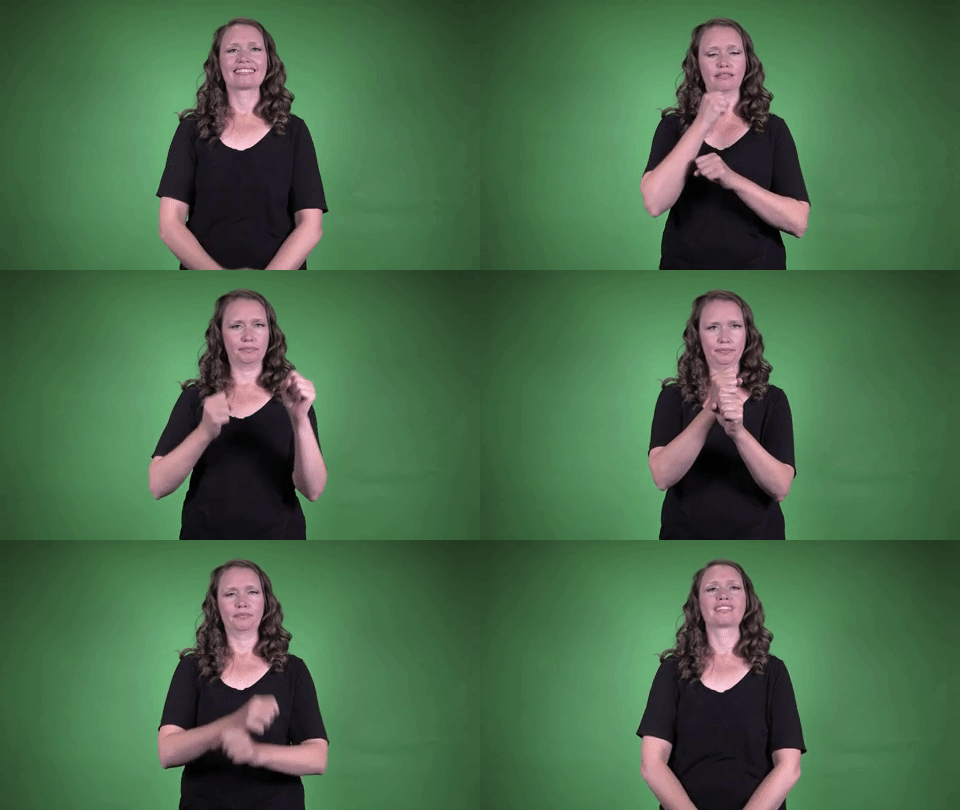
Sign for YEAR in ASL | ASL Dictionary

Definition: A period of 365 or 366 days. Sign for YEAR in ASL
YouTube player

Practice Activities

Practicing the sign for YEAR in ASL consistently helps build both muscle memory and fluency. One effective method is mirror work. Stand in front of a mirror and sign while watching your hand movements carefully. This allows you to self-correct and focus on handshape accuracy and fluid motion. Another helpful activity is recorded signing. Use your phone or webcam to film yourself signing sentences that include the sign for YEAR in ASL. Review the footage to evaluate clarity, facial expression, and timing. This method allows for measurable progress over time. Signing in context reinforces understanding. Use the sign for YEAR in ASL while telling stories, recounting events, or discussing your age. For example, practice phrases like “last year,” “next year,” or “in the year 2025” to develop your vocabulary and context skills. Advanced learners can drill with peers or instructors using rapid-response games. One partner signs a number, and the other responds with a sentence incorporating the sign for YEAR in ASL. You can also try interpreting calendar dates or historical facts to increase both speed and comprehension. To make practice more engaging, integrate the sign for YEAR in ASL into your daily routine. When reviewing your planner or setting goals, sign the years associated with each event. Repetition in meaningful contexts greatly enhances retention and fluency.

SEO Cultural Context

The sign for YEAR in ASL reflects the cyclical nature of time and is deeply embedded in Deaf culture. American Sign Language often expresses abstract concepts like time through visual metaphors, and this sign simulates the movement of the earth around the sun— a concept that’s both scientific and symbolic. In the Deaf community, time-related signs are frequently used during storytelling, event planning, and community gatherings. The sign for YEAR in ASL is especially common when discussing anniversaries, life milestones, and school timelines. Deaf culture values visual precision, so accurate movement and expression are key when using this sign in social and formal settings. Regional variations of the sign for YEAR in ASL are minimal, though signing speed and expressiveness may differ slightly depending on local signing communities. In most dialects of ASL, the sign is consistent in form and widely recognized, making it a reliable sign to use across the U.S. Understanding when to use the sign appropriately is also important. For example, ASL often conveys time concepts at the beginning of a sentence. Saying “last year I traveled” would begin with the sign for YEAR in ASL followed by facial expressions that indicate past tense. This structure reflects both grammatical norms and cultural storytelling traditions in ASL. Using the sign for YEAR in ASL properly also shows cultural respect. Deaf culture emphasizes clarity and shared understanding, so making an effort to sign accurately demonstrates your commitment to communication and inclusion.

Extended Definition

The sign for YEAR in ASL is made by forming both hands into the “S” handshape (closed fists). The dominant hand circles above the non-dominant hand and then comes to rest on top, symbolizing the passage of a full year. This circular motion visually represents the earth’s orbit, giving the sign both linguistic and conceptual depth. It’s important not to confuse the sign for YEAR in ASL with similar time-related signs like “month” or “day.” Those signs use different handshapes and motions. For instance, “month” uses the index finger and a downward motion along the back of the other index, while “day” mimics the sun moving across the sky. Each of these signs has its own visual metaphor and grammatical usage. Common errors with the sign for YEAR in ASL include incorrect handshape, reversed motion, or failing to make contact between the fists. Some learners also perform the motion too quickly or too slowly, which can affect meaning or clarity. Precision and rhythm are essential for this sign to be understood correctly. The sign can also be modified when used with numerical classifiers. For example, when saying “three years,” the number “3” is integrated into the sign structure. This variation is advanced but useful in fluent communication. Still, the core structure of the sign stays the same—dominant hand circling and landing on the non-dominant hand.

Tips for Beginners

If you’re just starting out, mastering the sign for YEAR in ASL can feel challenging, but it becomes easier with consistent practice. Start by focusing on the handshape: both hands should be in a tight “S” position. Practice this shape separately before adding movement. Use slow, deliberate motions as you learn. Many beginners rush the circular motion, making the sign unclear. Take your time to move the dominant hand fully around before resting it on the other fist. This will help reinforce the visual metaphor and ensure accuracy. Don’t be discouraged by mistakes. Everyone learning ASL makes errors at first. Record yourself and look for consistent issues—maybe your dominant hand isn’t completing the circle, or your fists don’t meet cleanly. These are common problems you can easily correct with awareness. Another tip is to sign in front of a partner or instructor who can give direct feedback. Seeing the sign for YEAR in ASL used correctly in conversation helps solidify your understanding. Ask questions and don’t be afraid to repeat the sign many times to build confidence. Finally, connect the sign with real-world events. Think about your birthday, school year, or future plans. Use the sign for YEAR in ASL in phrases that feel relevant to your life. This personal connection makes learning more engaging and meaningful.

Connections to Other Topics

The sign for YEAR in ASL is closely related to other time-related signs. One important connection is to the sign for “month.” While YEAR uses fists and a circular motion, “month” uses index fingers and a downward stroke. Both signs are used together in expressions like “one year and two months.” Another related sign is “age.” When discussing how old someone is, you’ll often combine numbers with time signs. For example, “five years old” uses the number 5 followed by the sign for YEAR in ASL. Understanding how these signs work together is key for expressing age in ASL. The sign for “time” itself is also conceptually linked. It uses a tapping gesture on the wrist, symbolizing a watch. Though different in execution, it shares the temporal theme and is frequently used in conjunction with the sign for YEAR in ASL to form phrases like “what time of year.” “Past” and “future” are grammatical markers that often frame discussions that include the sign for YEAR in ASL. These signs are typically placed at the beginning of a sentence and supported by appropriate facial expressions. Learning these markers enhances your ability to express complex ideas about time. Finally, the sign for “calendar” ties all these concepts together. This sign is often used in educational or business contexts and helps learners visualize how ASL organizes time. Combining “calendar” with the sign for YEAR in ASL helps create sentences about appointments, deadlines, and yearly events.

Lengthy Summary

The sign for YEAR in ASL is more than just a vocabulary item—it’s a visual representation of time, movement, and shared cultural understanding. Formed with both hands in “S” handshapes, the dominant hand circles the non-dominant and lands on top, symbolizing the earth’s orbit around the sun. This motion gives the sign its iconic structure and meaning. Practicing the sign for YEAR in ASL through mirror work, video feedback, and real-world examples can significantly improve your fluency. Using the sign in context—like describing events, scheduling plans, or telling stories—reinforces its usage and meaning. Advanced drills and peer feedback can also boost your confidence and accuracy. Culturally, the sign holds significance in the Deaf community, where time-related signs are essential in storytelling and daily conversation. Accuracy and expressiveness are not only linguistic necessities but also cultural expectations. By learning the sign for YEAR in ASL correctly, you demonstrate respect and a desire for authentic communication. Beginners should focus on forming accurate handshapes and mastering the rhythm of the motion. Mistakes are natural, but with consistent practice and real-life application, the sign becomes second nature. Connecting the sign to personal experiences like birthdays or school calendars helps make learning more meaningful. The sign for YEAR in ASL also links to a broader network of time-related signs such as “month,” “age,” “past,” and “calendar.” Understanding these connections deepens your grasp of ASL grammar and vocabulary. These relationships help you build complex sentences and express a wide range of ideas about time. In mastering the sign for YEAR in ASL, you’re not just learning how to indicate a unit of time—you’re opening the door to deeper, more nuanced ASL communication. Keep practicing, stay curious, and use the sign often in conversations, videos, and stories. With dedication and repetition, you’ll gain fluency and confidence. Keep signing—your year of learning has just begun! Synonyms: Year, 365 Days, Annual, Calendar Year, Twelve Months Educational resources: Find related learning materials in our course bank! Want more? Check out some of our popular learning activities on the homepage! Need to look up a sign? Use our highly rated dictionary: https://aslinteractive.com/best-asl-dictionary/ Follow us on tiktok: https://www.tiktok.com/@aslinteractive. More social media links at the bottom of this page! Long-tail Keywords: Categories: tags: time signs, calendar signs, date-related ASL, ASL vocabulary organization, yearly concepts in ASL

Want more? Check out some of our popular learning activities!

ASL Interactive Resources

ASLInteractive YouTube Channel

Follow us on tiktok: @aslinteractive.com

Follow us on Instagram: aslinteractive

Facebook page: aslinteractive

Facebook group: aslinteractive

LInkedIn: ASL Interactive LLC

Twitter: @ASL_interactive

*Some information on this page is AI-generated. AI can make mistakes. Please check the information.  

Responses