Sign for MIDNIGHT in ASL | ASL Dictionary

Definition: 12:00 at night.

Sign for MIDNIGHT in ASL

YouTube player

Practice Activities:

Cultural Context:

Practice Activities

To master the sign for MIDNIGHT in ASL, consistent and varied practice is essential. Begin by practicing in front of a mirror to ensure your handshape, movement, and placement are accurate. The sign for MIDNIGHT in ASL involves a specific spatial orientation that mirrors the position of the hands on a clock at twelve o’clock. Watching yourself helps develop muscle memory and builds confidence.

Record yourself signing short sentences that include the sign for MIDNIGHT in ASL. This could be as simple as “I went to bed at midnight” or “The fireworks started at midnight.” Reviewing your videos allows you to self-correct and track progress over time.

Practice using the sign for MIDNIGHT in ASL in real-life context. Talk about your daily schedule, tell a story, or describe New Year’s Eve events. The more you use the sign in meaningful conversation, the quicker it becomes second nature.

For advanced learners, try working with a signing partner. Take turns using the sign for MIDNIGHT in ASL in rapid drills, switching between related time signs like NOON or MIDDAY. Another drill is speed-matching, where one signer shows a time and the other responds with the correct sign. Include the sign for MIDNIGHT in ASL frequently to reinforce quick recognition and usage.

SEO Cultural Context

The sign for MIDNIGHT in ASL carries cultural nuances that connect deeply with Deaf community norms. Time-related signs like midnight are often used in storytelling, event planning, and daily routines. In Deaf culture, storytelling is a rich tradition, and precise temporal markers like the sign for MIDNIGHT in ASL add clarity and emotional impact.

The sign for MIDNIGHT in ASL is generally consistent across regions, but you may notice minor variations depending on local dialects or generational differences. Some older signers may use a slightly different motion or hand position, but the core concept remains the same. Always respect regional variations and adapt when communicating with diverse members of the Deaf community.

This sign is especially relevant in contexts such as New Year celebrations, late-night work schedules, or describing supernatural events associated with midnight. In ASL storytelling and folklore, the transition to midnight often marks a dramatic shift, making the sign for MIDNIGHT in ASL both functional and expressive.

Extended Definition

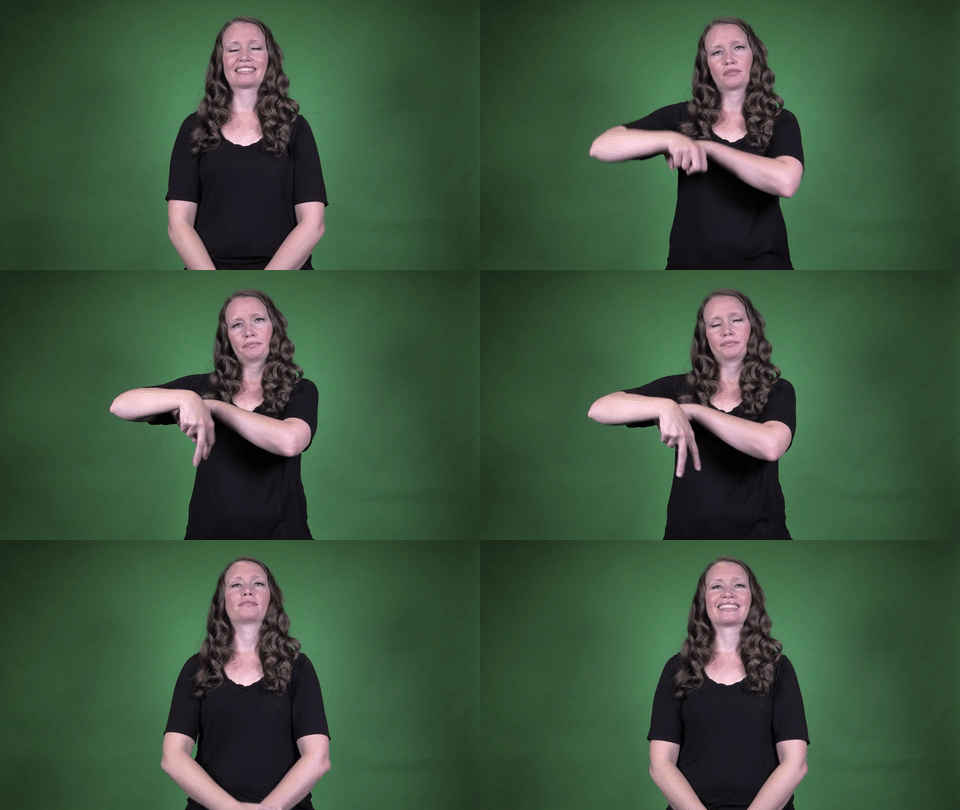
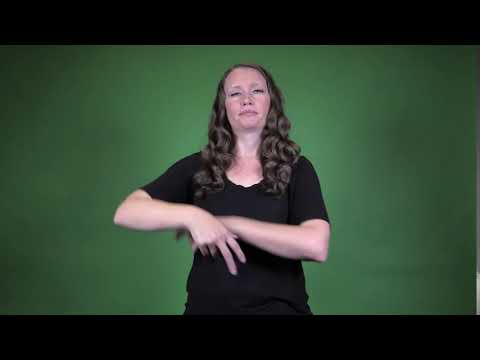
The sign for MIDNIGHT in ASL is based on a visual metaphor of a clock. To produce the sign, hold one arm horizontally in front of your body to represent the face of a clock. With your other hand, form the number 12 by pointing straight down onto the “clock face.” This orientation mimics the hands of a clock pointing to 12:00, but with emphasis on the night setting, often indicated by the context or a slight pause for effect.

It’s important to distinguish the sign for MIDNIGHT in ASL from the sign for NOON, which has a similar setup. The key difference lies in the spatial direction of the dominant hand. For NOON, the hand points upward, while for MIDNIGHT, the hand points downward. Learners often confuse the two, so careful attention to hand positioning is critical.

Some signers may add facial expressions or slight movement changes to emphasize the late-night connotation of the sign. For example, a furrowed brow or sleepy expression can add contextual meaning when using the sign for MIDNIGHT in ASL in a narrative.

Tips for Beginners

When learning the sign for MIDNIGHT in ASL, it’s common to mix it up with related time signs like NOON or MIDDAY. Beginners should focus on the hand direction and the concept it represents. Remember: for MIDNIGHT, the dominant hand points down, suggesting the middle of the night.

Start slow and don’t rush through the motion. Precision is more important than speed when you’re starting out. Use a mirror or video feedback to catch mistakes early on and correct them before they become habits.

Another tip is to practice in context. Instead of just repeating the sign, say full sentences like “I stayed up until midnight” while signing. This helps you internalize the meaning and rhythm of the sign for MIDNIGHT in ASL and prepares you for real conversations.

Finally, don’t get discouraged if it feels awkward at first. ASL is a physical language, and your hands need time to build the coordination required. With regular practice, the sign for MIDNIGHT in ASL will become a natural part of your vocabulary.

Connections to Other Topics

The sign for MIDNIGHT in ASL connects well to other time-related vocabulary. One closely related sign is NOON, which shares a similar clock-based structure but differs in hand orientation. Practicing both together helps reinforce the difference between day and night time signs.

Another related sign is NIGHT, which is often used to set the context for MIDNIGHT. NIGHT involves a curved hand motion over the back of the other hand, symbolizing the sun setting or the start of nighttime.

You can also link the sign for MIDNIGHT in ASL to temporal phrases like LATE or PAST. These signs help express broader time concepts and are essential in storytelling and scheduling.

In ASL grammar, time indicators like MIDNIGHT often appear at the beginning of a sentence. This practice sets the temporal context clearly, so learning the sign for MIDNIGHT in ASL also supports your understanding of ASL sentence structure.

Finally, the sign for MIDNIGHT in ASL pairs well with signs related to events, like PARTY, NEW YEAR, or SLEEP. These combinations create opportunities for more complex expressions and situational storytelling.

Lengthy Summary

The sign for MIDNIGHT in ASL is a visually rich and conceptually clear representation of one of the most important markers of time. Based on the imagery of a clock striking twelve, the sign captures the essence of the transition between one day and the next. Whether used to describe an event, narrate a story, or explain a routine, the sign for MIDNIGHT in ASL is both functional and expressive.

Learning this sign involves more than just memorizing handshapes. It requires understanding the cultural context, practicing accurate movement, and using it in meaningful conversation. Deaf culture values clarity, and the ability to use precise time signs like the sign for MIDNIGHT in ASL shows respect for the language and its users.

Beginners will benefit from mirror practice, contextual usage, and recording their signing. Common mistakes—like confusing MIDNIGHT with NOON—can be avoided through careful observation and repetition. Advanced learners can deepen their skills by linking the sign for MIDNIGHT in ASL with related vocabulary and grammatical structures.

As part of a broader time-related vocabulary set, the sign for MIDNIGHT in ASL opens doors to storytelling, event planning, and expressive communication. It connects seamlessly with signs like NIGHT, PARTY, and NEW YEAR, reinforcing the thematic power of time in ASL narratives.

Keep practicing the sign for MIDNIGHT in ASL daily. Use it in sentences, stories, and conversations. The more you integrate it into your signing habits, the more naturally it will flow. With curiosity, effort, and consistency, your ASL vocabulary will grow stronger each day—right up to midnight .

Extended Definition:

Synonyms: midnight, 12 AM, twelve o’clock at night, the middle of the night, dead of night

Educational resources: Find related learning materials in our course bank!

Want more? Check out some of our popular learning activities on the homepage!

Need to look up a sign? Use our highly rated dictionary: https://aslinteractive.com/best-asl-dictionary/

Follow us on tiktok: https://www.tiktok.com/@aslinteractive. More social media links at the bottom of this page!

Long-tail Keywords: what is the sign for midnight in ASL, how do you sign midnight in ASL, ASL midnight sign meaning

Categories:

tags: time-related signs, daily schedule signs, ASL vocabulary, nighttime signs, ASL time expressions

Tips for Beginners:

Connections to Other topics:

Summary:

Want more? Check out some of our popular learning activities!

ASL Interactive Resources

ASLInteractive YouTube Channel

Follow us on tiktok: @aslinteractive.com

Follow us on Instagram: aslinteractive

Facebook page: aslinteractive

Facebook group: aslinteractive

LInkedIn: ASL Interactive LLC

Twitter: @ASL_interactive

*Some information on this page is AI-generated. AI can make mistakes. Please check the information.


Responses