Practice Activities
Practicing the sign for SLEEP in ASL can be both fun and effective when you use a variety of methods. Start by standing in front of a mirror and signing the word slowly. Watch your facial expression and hand movement to ensure you’re capturing the relaxed, sleepy feeling the sign conveys. This mirror work helps develop self-awareness and muscle memory. Record yourself signing the word in different sentences to track your progress. Use your phone or computer to review and compare your performance to fluent signers. This will help you refine fluency, handshape, and motion over time. Try incorporating the sign for SLEEP in ASL into your daily routine. For example, sign it before bedtime or when talking about your day. Use it in phrases like “I need to sleep” or “Did you sleep well?” Practicing in meaningful context helps reinforce retention. Advanced learners can challenge themselves with receptive drills. Watch signed videos or work with a partner who signs the word within a sentence, and practice understanding it without speaking. Another effective activity is speed drills—set a timer and sign short sentences with the word “sleep” for one minute without stopping. If you’re part of a learning group, try role-playing a bedtime routine using the sign for SLEEP in ASL and other related vocabulary. Engaging in interactive activities will build your confidence and understanding of how the sign fits naturally into conversation.
SEO Cultural Context
The sign for SLEEP in ASL is more than just a vocabulary term; it reflects the expressive and visual nature of ASL and the Deaf community. This sign shows how ASL often uses gestures that are symbolic and intuitive, mimicking real-life actions. The hand starts open near the face and closes gently, as if pulling down sleep over the face—a graceful and visual metaphor for drifting off. Culturally, the sign is widely used in daily communication within the Deaf community. It’s common in conversations about routines, health, emotions, and family life. When Deaf parents sign bedtime stories to their children, the sign for SLEEP in ASL becomes part of a nurturing interaction that strengthens language acquisition and emotional connection. Although the sign is consistent across most regions, slight variations in movement or facial expression may appear depending on geographic or generational factors. For example, some signers might use a slightly more expressive facial expression to emphasize tiredness or relaxation. In Deaf culture, visual clarity and expression are essential. When using the sign for SLEEP in ASL, it’s important to maintain a calm and relaxed facial expression to match the concept. Overexaggeration or robotic movement can make the sign look unnatural or confusing. Understanding cultural norms like these is key to respectful and accurate ASL use.
Extended Definition
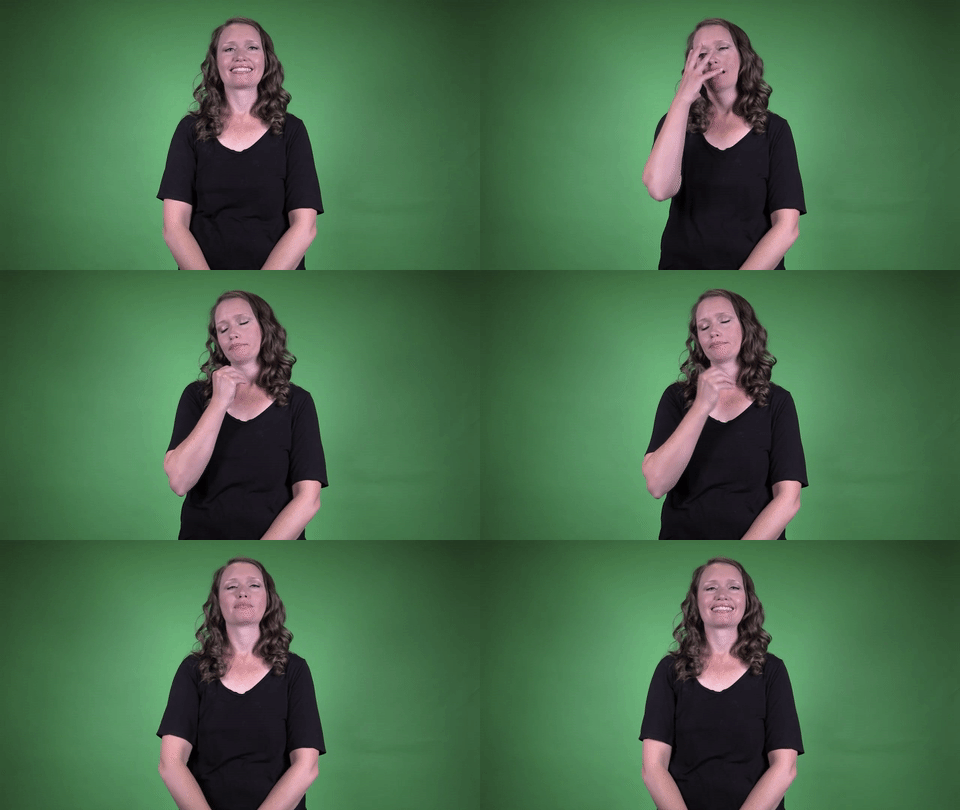
The sign for SLEEP in ASL is made by placing your dominant hand open in front of your face, with your fingers spread slightly. Then, as your hand moves down your face, your fingers and thumb come together gently, ending with a closed hand near your chin—almost like you’re pulling down a curtain of sleep. Your facial expression should appear relaxed, calm, and sleepy to fully convey the meaning. This sign is closely related to emotions and states of being. It’s used in a variety of phrases such as “go to sleep,” “I am sleepy,” or “Did you sleep well?” Because of this, it’s often one of the first signs learned by ASL students and Deaf children alike. A common error beginners make is using a stiff handshape or too fast of a movement when signing. This can result in a sign that looks abrupt or unnatural. Another mistake is forgetting the facial expression, which is crucial in conveying the intended meaning. A flat or neutral face can confuse viewers or make the sign seem incomplete. It’s also worth noting that the sign for SLEEP in ASL is different from signs like “nap” or “rest.” While they may look similar, each has its own distinct motion and usage. For example, the sign for “nap” is usually smaller and shorter in duration, while “rest” involves crossing the arms over the chest. Learning these distinctions helps build precision and fluency.
Tips for Beginners3>
If you’re new to ASL, learning the sign for SLEEP in ASL is a great starting point. It’s visual, intuitive, and used in everyday conversation. Begin by practicing the handshape slowly, paying attention to the closing motion and how it flows naturally from your face to your chin. One tip is to imagine you’re slowly pulling down a window shade over your face. This imagery can help make the movement feel smooth and expressive. Also, soften your facial features—let your eyes slightly close and your mouth relax. This adds emotional depth to the sign. Avoid the temptation to rush through the movement. Fast or abrupt motions can make your signing look mechanical. Focus on grace and clarity instead. Take your time and repeat the sign several times until it feels natural. Another common mistake is confusing the sign for SLEEP in ASL with other signs like “bored” or “rest,” which involve different hand placements and facial expressions. Watching native signers and practicing with video resources can help you distinguish these signs more clearly. Use flashcards or apps to remind you to sign the word daily. The more frequently you practice, the more comfortable you’ll become. Don’t be afraid to make mistakes—each effort brings you closer to fluency.
Connections to Other Topics
The sign for SLEEP in ASL connects to a range of related vocabulary and themes that enrich your signing skills. One closely related sign is “tired.” This sign involves bringing your bent hands to your chest and letting your shoulders slump a bit, showing exhaustion. Using both “sleep” and “tired” together can help express complex ideas about energy and rest. Another useful connection is the sign for “wake up.” This is a dynamic sign that resembles your eyes opening suddenly. It contrasts nicely with the calm, downward motion of the sign for SLEEP in ASL and can be used to tell stories or describe morning routines. The sign for “dream” is also relevant. It’s a more abstract sign that starts at the forehead and moves outward in a wavy motion, as if representing a floating thought. It pairs well with “sleep” in discussions about emotions, desires, or storytelling. “Bed” is another related sign, made by placing your hands together as if resting your head on them. This sign frequently appears alongside the sign for SLEEP in ASL in conversations about bedtime, sleep habits, or household routines. Finally, consider the grammatical structure of time markers in ASL. Phrases like “last night” or “tomorrow” are placed at the beginning of a sentence to establish context. When using the sign for SLEEP in ASL, practice combining it with these markers to build more complex and natural sentences.
Lengthy Summary
Mastering the sign for SLEEP in ASL is a rewarding step in your journey toward fluency. This sign combines graceful hand movement with expressive facial features to visually represent the concept of falling asleep. Whether you’re signing independently or in conversation, it’s a key term for communicating about rest, routines, and well-being. Through daily practice, you can integrate this sign into your vocabulary in meaningful ways. Mirror work, video recording, and contextual use all support your progress. Engaging in receptive and expressive drills will deepen your understanding and make your signing more natural. The cultural context of the sign highlights the importance of visual storytelling and emotional expression in ASL. Understanding how the sign is used in family life, education, and storytelling offers insight into Deaf culture and communication norms. This awareness not only improves your signing but also strengthens your cultural competence. By learning how to avoid common beginner mistakes—like stiff handshapes or missing facial expressions—you’ll develop clear and respectful signing habits. Connecting the sign for SLEEP in ASL to related terms like “tired,” “wake up,” and “dream” expands your expressiveness and helps you engage in richer conversations. As you continue your ASL journey, remember that language learning is not just about memorizing signs—it’s about building connections. The sign for SLEEP in ASL opens the door to conversations about health, daily life, and emotional well-being. Keep practicing, stay curious, and let each sign you learn bring you closer to a deeper understanding of ASL and the community it represents. Synonyms: sleep, slumber, nap, rest, doze Educational resources: Find related learning materials in our course bank! Want more? Check out some of our popular learning activities on the homepage! Need to look up a sign? Use our highly rated dictionary: https://aslinteractive.com/best-asl-dictionary/ Follow us on tiktok: https://www.tiktok.com/@aslinteractive. More social media links at the bottom of this page! Long-tail Keywords: what is the sign for sleep in asl, how do you sign sleep in asl, asl sign for sleep Categories: tags: sleep vocabulary, ASL basics, daily routines in ASL, everyday signs, ASL for beginners
Want more? Check out some of our popular learning activities!
ASL Interactive Resources
ASLInteractive YouTube Channel
Follow us on tiktok: @aslinteractive.com
Follow us on Instagram: aslinteractive
Facebook page: aslinteractive
Facebook group: aslinteractive
LInkedIn: ASL Interactive LLC
Twitter: @ASL_interactive
*Some information on this page is AI-generated. AI can make mistakes. Please check the information.
Responses