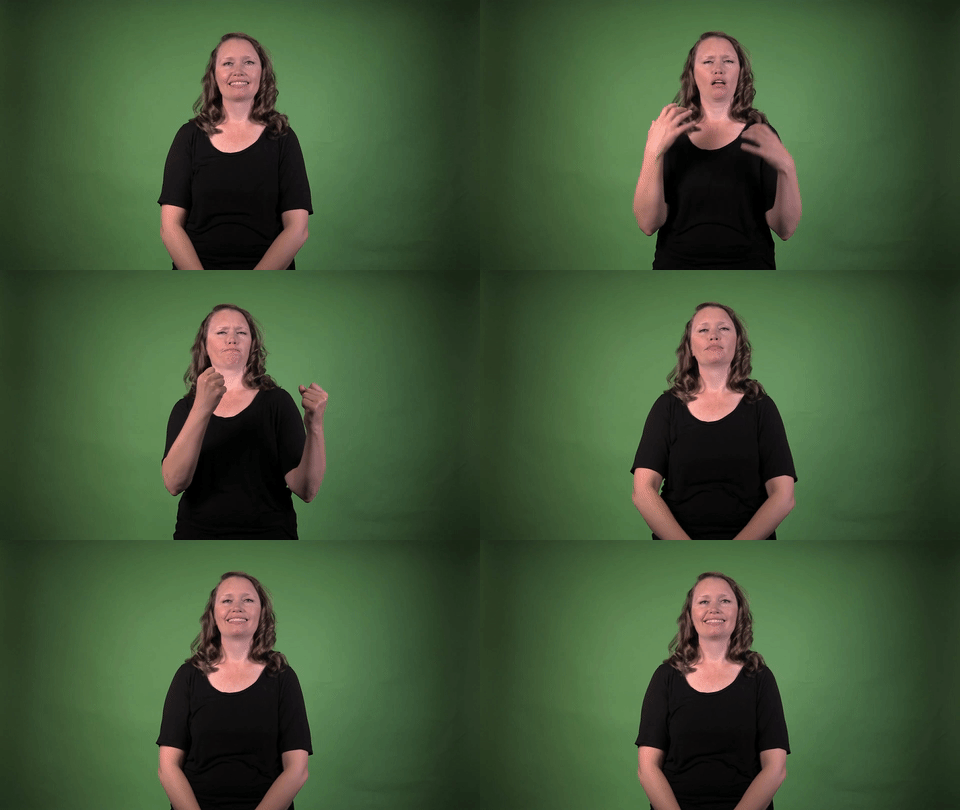
Definition: Having courage.
Sign for BRAVE in ASL

Practice Activities:
To get comfortable with the sign for BRAVE in ASL, start by practicing it in isolation in front of a mirror. Focus on your handshape, facial expression, and body position to reflect the meaning of courage and inner strength. Repeat the sign multiple times, switching between slow and quick movements to enhance muscle memory.
Next, incorporate the sign into short phrases and sentences. Sign phrases like “You are brave,” “She is brave,” or “Be brave today!” Try signing in front of a classmate or partner to get feedback. Adding facial expressions of determination or pride will help reinforce the meaning of the sign.
Storytelling is another great way to improve fluency. Create a short story about a time you or someone you know had to be brave. As you sign, emphasize the sign for BRAVE in ASL during key emotional moments to highlight its meaning. For example, you could describe someone rescuing a lost dog, standing up for a friend, or performing on stage despite nervousness.
Pair up with a partner and play a scenario-based game. One person describes a situation, and the other responds using the sign for BRAVE in ASL. Scenarios can include facing fears, trying something new, or overcoming a challenge. This helps build quick-thinking skills and confidence.
Use role-play to practice in real-life situations. One student can act as a teacher encouraging a student before a test, or a parent comforting a child before going to the doctor. Incorporate supportive signs along with the sign for BRAVE in ASL to build full sentence structure and emotional tone.
Finish each session by reflecting on what felt most challenging and what improvements were made. With continued use in varied contexts, the sign will become smoother and more natural.
Cultural Context:
In American Sign Language, the sign for BRAVE in ASL goes beyond just describing courage. It’s a visual representation of inner strength, often tied to personal identity and emotion within Deaf culture. When someone uses the sign for BRAVE in ASL, it reflects qualities like resilience, independence, and a readiness to face challenges.
The concept of bravery in Deaf culture can carry deep significance. Many Deaf individuals navigate a world with systemic barriers, and being brave is often a necessary part of daily life. Whether overcoming communication challenges or advocating for accessibility, the sign for BRAVE in ASL is a powerful gesture of empowerment.
The sign for BRAVE in ASL isn’t just about heroic acts. It’s also used in more personal and emotional contexts, such as acknowledging someone who has stood up for themselves or taken a difficult step in life. The sign expresses admiration and respect, making it a meaningful addition to daily ASL conversations.
Parents might teach their Deaf children the sign for BRAVE in ASL early on, encouraging not just language learning but also important life lessons. This sign is a way to build confidence in young signers, showing them that bravery can be quiet and internal as well as loud and public.
In storytelling, social media, and ASL poetry, the sign for BRAVE in ASL often carries larger symbolic meaning. When used by performers or educators, it can highlight challenging experiences or historical struggles, especially within the Deaf community. Audiences connect emotionally through the visual nuance of this sign.
For Deaf people of color and others with intersectional identities, the sign for BRAVE in ASL can have additional depth. Bravery might relate to cultural pride or pushing through various forms of discrimination. Signing BRAVE can be both a personal declaration and a form of resistance.
In educational settings, especially those focused on social-emotional learning, the sign for BRAVE in ASL may be included in classroom discussions. Teachers use signs like this one to encourage emotional intelligence and communication in Deaf students. It helps promote a positive self-image and mutual respect.
You might also see the sign for BRAVE in ASL featured in mental health conversations. Advocates and counselors within the Deaf community often use it to acknowledge the courage it takes to seek help and share feelings. It’s an affirming sign that supports emotional well-being.
Using the sign for BRAVE in ASL when telling someone they are brave provides not only a word but a supportive visual. It emphasizes meaning through motion, making the message more heartfelt.
Extended Definition:
The sign for brave in ASL conveys strength, courage, and resilience. In American Sign Language, this concept is shown through a specific gesture that captures both the emotional and symbolic meaning of bravery. When someone uses the sign for brave in ASL, they are expressing inner strength and fearlessness in the face of challenge or danger.
To perform the sign for brave in ASL, begin with both hands open and near the shoulders or chest area. Then bring your hands forward into fists as if drawing strength from within your heart. The motion symbolizes the act of becoming courageous or drawing confidence from deep within.
This sign visually reflects the personal journey of becoming brave. It is not just about physical strength but also emotional and mental resilience. People use this sign in ASL to describe themselves or others who take action despite fear.
In ASL culture, signs like brave are deeply connected to concepts and personality traits. The motion and facial expression add context to the meaning. When signing brave, it’s common to show a confident or serious facial expression to match the concept being expressed.
In daily ASL communication, the sign for brave in ASL can be used to describe everyday bravery—such as someone facing a tough conversation or making difficult decisions. It’s also used when discussing stories, role models, or characters in books and movies who show fearless or bold behavior.
This sign is part of a broader group of ASL vocabulary related to emotions and personality traits. Similar signs might include courageous, strong, or proud, depending on the situation. Users often pair the sign for brave with descriptive signs to give more context or to add emotional depth to their sentence.
Children learning ASL often enjoy practicing signs that describe people and feelings. The sign for brave in ASL is a great way to talk about heroes, courage, or standing up for oneself. Educators use storytelling and visually rich examples to help children remember what bravery looks like and how to express it.
Since ASL is a visual language, non-verbal cues such as eye contact and body posture are important. So when you sign brave, make sure your overall look shows confidence or boldness. This ensures the message is clear and understood even without spoken words.
Online ASL dictionaries frequently include a video or animation showing the correct handshape and motion for the sign for brave in ASL. These resources help learners understand not just the mechanics of the sign but the feeling behind it. Watching native signers is especially helpful for picking up nuances.
Whether used in conversations,
Synonyms: courageous, fearless, bold, valiant, daring
Educational resources: Find related learning materials in our course bank!
Want more? Check out some of our popular learning activities on the homepage!
Need to look up a sign? Use our highly rated dictionary: https://aslinteractive.com/best-asl-dictionary/
Follow us on tiktok: https://www.tiktok.com/@aslinteractive. More social media links at the bottom of this page!
Long-tail Keywords: what is the sign for brave in ASL, how do you sign brave in American Sign Language, ASL sign for brave
Categories:
tags: emotions, traits, feelings, courage, personal qualities
Parameters
*Handshape*:
The handshape for the sign for BRAVE in ASL begins with both hands in a relaxed open 5-handshape, placed near the shoulders or chest. The fingers are spread slightly apart, with palms facing the body.
As the sign is made, the hands move slightly outward and change to form closed fists, showing a sense of inner strength and confidence. The shift from open hands to fists conveys the concept of courage embedded in the sign for BRAVE in ASL.
*Palm Orientation*:
The palm orientation for the sign for BRAVE in ASL begins with both hands in a clawed “5” handshape placed near the shoulders. Palms are facing toward the body as the hands touch the upper chest area. As the movement is executed, the hands pull away from the chest and form into relaxed “S” handshapes.
During this transition, the palm orientation changes slightly to a more neutral or downward angle. This fluid motion helps convey the meaning and feeling behind the sign for BRAVE in ASL .
*Location*:
The sign for brave in ASL is produced near the upper chest area, specifically just below the shoulders. This location emphasizes strength and inner courage, aligning with the meaning of “brave.”
Both hands typically start at the chest or upper shirt area and pull outward or form fists. The movement away from the chest reinforces the concept of pulling bravery from within. This central placement is key in conveying the sign for brave in ASL.
*Movement*:
The movement for the sign for BRAVE in ASL begins with both hands in a loose open-5 shape, touching the upper chest near the shoulders. Then, the hands move outward and form into S handshapes, as if pulling something strong from the body.
This action shows inner strength and personal courage, capturing the essence of the sign for BRAVE in ASL . The motion conveys a sense of drawing bravery from within oneself.
*Non-Manual Signals*:
The non-manual signals for the sign for BRAVE in ASL typically include a confident and assertive facial expression . Keep your eyebrows slightly raised and your eyes focused forward, showing determination or inner strength. This expression reflects the quality of bravery, aligning with the sign’s meaning. When using the sign for BRAVE in ASL, avoid smiling or overly relaxed features, as these can weaken the intended message.
*Prosody, Dominant/Non-Dominant Hand*:
The sign for brave in ASL uses only the dominant hand. Start with your dominant hand open, fingers spread, and place it on your upper chest near the collarbone. Then pull the hand away from the chest into an “S” handshape, as if drawing strength inward. The non-dominant hand is not used in this sign.
This gesture symbolizes inner strength and courage. The sign for brave in ASL emphasizes personal resolve, with confident motion and facial expressions supporting the concept.
Tips for Beginners:
When learning the sign for BRAVE in ASL, it’s important to focus on both the motion and the expression that accompanies the sign. This sign typically starts with open hands near the shoulders and then pulls away into fists, symbolizing confidence and inner strength. Make sure your movements are firm but not rigid—fluidity will help convey the meaning more naturally.
Facial expressions play a vital role in ASL, and this is especially true for the sign for BRAVE in ASL. Pair the motion with a confident or proud facial expression to accurately express the concept. Beginners often overlook facial grammar, but it greatly contributes to clarity and depth in communication.
Another common mistake is making the movement too fast or too slow. Keep the sign at a moderate, deliberate pace to avoid confusion with signs that may look similar. Practicing in front of a mirror or recording yourself can help you evaluate both your hand shape and your pace.
When signing in a conversation, always consider the context. The sign for BRAVE in ASL may need to be slightly exaggerated or emphasized depending on whether you’re telling a story or describing a quality of someone. Pay attention to the surrounding signs and modify your intensity accordingly.
For beginners, consistent repetition is key. Use the sign in real-life scenarios or when describing characters while storytelling. Associating it with actions you see in daily life can help you internalize the motion and meaning.
Lastly, don’t forget to watch native signers to observe variations and nuances. The more you expose yourself to different styles, the better your understanding and execution will become. Always strive for clarity and confidence when performing the sign for BRAVE in ASL. With patience and practice, it will become a natural part of your expressive vocabulary.
Connections to Other topics:
The sign for BRAVE in ASL ties in with broader themes of personality and internal character traits, such as strong, bold, or confident. These are often explored through similar non-manual signals like head nods or upright body posture. The sign visually conveys the idea of pulling something from oneself, which matches the conceptual idea of drawing inner strength.
The sign for BRAVE in ASL shares movement and palm orientation parallels with signs like STRONG and COURAGE, helping reinforce physical-emotional connections in vocabulary development. This connection aids learners in creating mental associations between similar character-based signs, improving vocabulary retention. It’s also useful when discussing personal characteristics in narratives or self-descriptions.
In storytelling or personal testimonies, the sign for BRAVE in ASL often appears alongside signs like CHALLENGE, OVERCOME, or STAND-UP-FOR. These compound ideas deepen meaning and express how bravery results in or is required for action. For example, combinations such as LOOK-BACK REMEMBER BRAVE can powerfully convey messages of historical resilience or family honor.
The sign is also conceptually linked to HERO or FEARLESS, which may be conveyed with additional facial expressions or context-specific classifiers. When describing fictional characters, historical figures, or moments of suspense, BRAVE is often embedded in a sequence of signs that reflect personal or group valor. This strengthens learners’ ability to express not just nouns or adjectives but deeper personal narratives.
In classroom settings or discussions about personal growth, the sign for BRAVE in ASL can pair with signs such as TRY, RISK, or PROVE. These combinations enrich topical vocabulary and help learners engage in more complex conversations about emotions, challenges, and decisions. It also demonstrates how abstract traits can be made visual and expressive in ASL.
Summary:
The sign for BRAVE in ASL conveys a deep cultural and emotional resonance. It goes beyond literal physical courage to denote inner strength, dignity, and moral fortitude.
To produce the sign, start with both hands open and spread, placed near the upper chest or collarbone. The hands then move outward and close into fists, as if gathering strength inside and drawing it in.
This movement suggests an internal transformation, as though someone is drawing courage from their core. The gesture is metaphorically rich, making it highly intuitive to both Deaf and hearing signers.
The sign avoids any depiction of external threats or combat—it’s more about self-empowerment. This is significant culturally because bravery in the Deaf community often includes standing up for oneself in hearing-dominated spaces.
In ASL grammar, the sign for BRAVE can be used both as an adjective and as part of a predicate structure. For example, one can sign ‘YOU BRAVE’ or ‘HE/SHE BRAVE-FACE IT CHALLENGE’.
Modifiers can be added non-manually to show the degree of bravery. Eyebrows raised or a firm set to the mouth can indicate a more intense version of bravery, while subtle head nodding adds affirmation.
The sign is often conflated with STRONG or COURAGE under certain contexts, but all three signs differ slightly in handshape and movement. This overlap shows how ASL signs flexibly navigate a shared semantic field.
The sign for BRAVE in ASL is often taught to children to help instill self-confidence. This supports emotional development by giving young signers a visual-kinesthetic way to recognize their own strength.
In stories and narratives, the sign for BRAVE features heavily to denote heroes or people making tough choices. It’s especially common when describing characters in Deaf folklore who overcome challenges.
The cultural significance of bravery in the Deaf community includes everyday acts like advocating for interpreters or challenging ableism. Signing BRAVE in these contexts recognizes quiet, consistent resistance as heroic.
The sign does not depend on facial expression for comprehension, but expression enhances its depth. This makes it versatile in both expressive and receptive channels during storytelling or personal sharing.
In terms of applied linguistics, this sign highlights how ASL uses metaphorical embodiment. Hands gather in to show abstract qualities like courage, blending kinesics and semantics naturally.
Linguistically, it often appears in the same context with signs like CONFIDENCE, DETERMINED, and STAND-UP. This positions it within a network of signs relating to internal traits and personal identity.
There’s also an educational use for the sign for BRAVE in social-emotional learning curricula. Teachers and interpreters may pair it with roleplay or narratives to explore values in Deaf education.
The sign is symmetrical in movement and uses neutral space. This simplicity supports easier acquisition for beginners and reinforces the centrality of the chest in expressing strong emotions.
Related signs like STRONG use a different handshape and often pivot towards muscle imagery, while BRAVE stays conceptually inward. These small variations help learners distinguish between nuanced emotional states.
Learning the sign for BRAVE in ASL can be empowering for second-language learners. It physically enacts a concept that may have subtle variations across cultures but still feels universally resonant.
There’s a parallel between this sign and metaphors in English, like “dig deep” or “muster your courage.” This cross-linguistic connection shows how embodiment plays a role in language universals.
The movement trajectory — from openness to closure — mimics the psychological act of centering oneself. This alignment illustrates why ASL is powerful for explaining emotions and traits.
The sign for BRAVE in ASL is also often used as a compliment, especially in affirming someone’s honesty or vulnerability. It’s a validating gesture that builds relational trust in conversation.
In ASL poetry and performance, BRAVE may be signed with dramatic pause and layered meaning. It’s one of those emotionally dense signs that anchors character development in visual storytelling.
This is especially true in visual vernacular and ASL slam poetry, where bravery often connects to personal struggle or identity. The sign becomes not just literal but symbolic of social justice themes.
The sign is gender-neutral and used across all ages. From a toddler just learning to speak up, to an elder reflecting on a lifetime of challenges, BRAVE has wide applicability.
The sign’s metaphoric status means it doesn’t feature an indexical reference. This suggests its meaning is inherently abstract—a concept rather than a thing, placing it in high-concept vocabulary tiers.
The sign for BRAVE in ASL is useful in mental health discourse within the Deaf community. Therapists and counselors may incorporate it into affirmations, reinforcing emotional resilience.
In Deaf theater or film, the sign’s direct movement draws focus and can be used silently for dramatic emphasis. It’s often the visual punctuation in scenes revealing a character’s moral arc.
For interpreters, maintaining clarity with this sign during simultaneous interpreting is key due to
Want more? Check out some of our popular learning activities!
ASL Interactive Resources
ASLInteractive YouTube Channel
Follow us on tiktok: @aslinteractive.com
Follow us on Instagram: aslinteractive
Facebook page: aslinteractive
Facebook group: aslinteractive
LInkedIn: ASL Interactive LLC
Twitter: @ASL_interactive
*Some information on this page is AI-generated. AI can make mistakes. Please check the information.


Responses