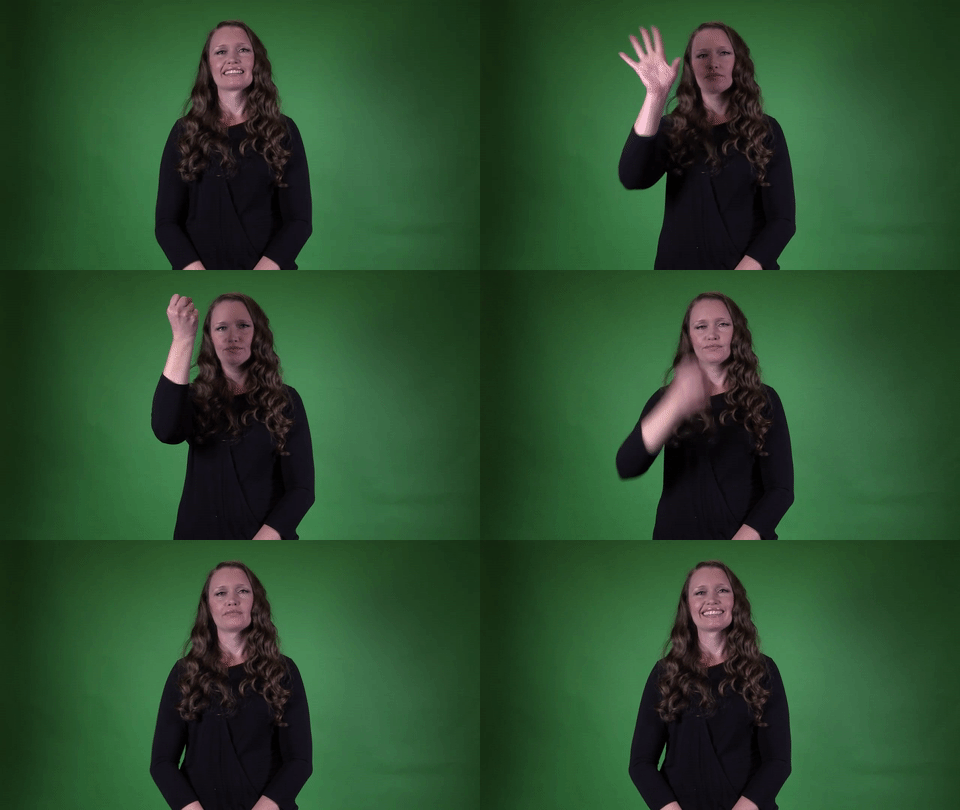
Definition: A small flying insect
Sign for FLY in ASL
Practice Activities:
Start by practicing the sign for FLY in ASL in isolation, focusing on handshape, movement, and facial expressions. Stand in front of a mirror to check your form, and repeat the sign multiple times until it feels natural. Make sure you’re using the correct airplane-like hand movement that mimics something soaring through the air.
Once you’re comfortable with the sign itself, begin using it in simple phrases. Practice signing short sentences like “I fly,” “Birds fly,” or “Airplanes fly fast.” These basic constructions help reinforce the sign’s meaning and usability in common language.
To add variety, create flashcards with different related words like plane, trip, sky, and airport. Use these cards to create new combinations and sign mini stories. This helps you get comfortable using the sign for FLY in ASL within more realistic, everyday conversations.
A fun solo activity is to describe scenes using only ASL. For instance, imagine a bird flying through the trees or a plane flying over a city. Use gestures and facial expressions to bring the story to life while incorporating the sign for FLY in ASL as needed. This encourages fluidity and expressive signing.
If practicing with a partner, take turns miming different types of flying: birds, helicopters, insects, or paper airplanes. Your partner guesses what kind of flying you’re portraying based on your signs and movement. This helps reinforce clear distinctions and creative use of the sign.
Storytelling prompts like “Describe the last time you flew on an airplane” allow for extended use of the sign for FLY in ASL. Your goal is to retell the story using as many relevant signs as possible, including how and why you flew. This creates a natural, engaging way to internalize the sign through personal context.
Cultural Context:
In American Sign Language, the sign for FLY in ASL carries meaning beyond just movement through the air. It’s a concept that often reflects cultural and environmental experiences within the Deaf community. Whether referring to birds in motion, airplanes taking off, or the imaginative act of flying, the sign for FLY in ASL is rich with visual storytelling.
Within Deaf culture, visual representation is essential. So, the sign for FLY in ASL often mirrors real-life imagery, such as the flapping of wings or the motion of a plane. Since ASL is a visual language, the body and hands form a kind of dance that captures the essence of what it means to fly.
The sign for FLY in ASL can vary slightly based on context. You might use one variation for insects, another for airplanes, and yet another when describing a fantasy or dream of flying. These subtle differences reflect the language’s flexibility and deep connection to visual meaning.
In Deaf storytelling and folklore, the idea of flight can symbolize freedom, imagination, and even escape. When signing a concept like FLY in ASL, it’s often not just about movement but about emotion and idea. This shows how language and culture are intricately tied together.
Many children learning ASL are introduced to the sign for FLY when reading or being read to in visual storybooks. It becomes one of the first verbs that help paint a vivid scene. From butterflies to birds to superheroes, the word fly captures endless possibilities in a Deaf child’s imagination.
In Deaf education, signs like the sign for FLY in ASL help anchor vocabulary in visual memory. Teachers often use real-world images or trips to airports or nature walks to link the meaning of the sign with direct experience. That grounding helps students grasp both language and concept.
The sign for FLY in ASL also appears in everyday signed conversations, whether discussing vacations, recalling dreams, or describing passing time. As a common verb, it plays a frequent and necessary role in communication. It’s also an expressive sign that can easily be adapted for storytelling.
Deaf poets and performers use signs like FLY in ASL to express creativity and emotion. In performance ASL, the motion of flight can be exaggerated to express joy, fear, or freedom. This adds depth and richness that words alone can’t capture.
Visual metaphors are essential in ASL, and FLY holds a central place in expressing direction, change, and transformation. In both casual and artistic signing, the concept of flight
Extended Definition:
The sign for FLY in ASL represents the motion of something or someone moving through the air. It can refer to an object flying, such as a bird or airplane, or to a person traveling by air. This versatile sign is commonly used in both casual and formal conversations within the Deaf community.
When signing FLY in ASL, the dominant hand typically mimics the motion of wings in flight. The handshape may vary slightly depending on regional sign variations, but the most widely accepted version uses a one-handed gesture that visually represents flying. Facial expressions and context play important roles in conveying the specific meaning.
The sign for FLY in ASL can also be incorporated with directional movements to show where someone or something is flying to or from. For example, if you’re saying you’re flying to another city, you would sign FLY and motion in the direction of that location. This helps provide clear, visual context when sharing travel plans or talking about movement.
In storytelling or expressive signing, the sign for FLY in ASL can add depth to visual descriptions. It is often used to describe birds, insects, and even magical or imaginative concepts like flying superheroes or dreams. The flexibility of the sign allows for creativity in visual narratives.
Many ASL learners find the sign for FLY easy to remember due to its iconic nature. It closely resembles the concept it signifies, which helps reinforce learning and recall. Teachers often introduce it early in beginner ASL courses because it’s both practical and visually intuitive.
This sign is frequently paired with signs for AIRPLANE, BIRD, or TRAVEL to provide more detailed information. For instance, one might sign FLY to indicate movement, then follow with AIRPLANE to specify the method of travel. This combination builds more complete ideas during conversations in American Sign Language.
It’s important to practice the sign for FLY in ASL with smooth, natural motion. Jerky or stiff movements can appear unnatural or confusing to fluent signers. Watching native signers demonstrate the sign through videos or live interaction can help improve accuracy and flow.
In some regional or cultural variations, the sign for FLY in ASL can differ slightly. While most use a fluttering hand shape, others might use a different gesture depending on the context or the speaker’s background. Exposure to a wide variety of signing styles helps learners become more adaptable and fluent.
Learning the sign for FLY in ASL also opens the door to a wider vocabulary related to air travel, nature, and even metaphorical
Synonyms: soar, glide, hover, dart, zoom
Educational resources: Find related learning materials in our course bank!
Want more? Check out some of our popular learning activities on the homepage!
Need to look up a sign? Use our highly rated dictionary: https://aslinteractive.com/best-asl-dictionary/
Follow us on tiktok: https://www.tiktok.com/@aslinteractive. More social media links at the bottom of this page!
Long-tail Keywords: what is the sign for fly in ASL, how do you sign fly in ASL, ASL sign for fly
Categories:
tags: fly in American Sign Language, how to sign fly in ASL, ASL sign for fly, learn fly in ASL, fly sign language tutorial
Parameters
*Handshape*:
The handshape for the sign for FLY in ASL uses the “I-Love-You” handshape , where the thumb, index finger, and pinky are extended while the middle and ring fingers remain down. This handshape mimics the motion of a small aircraft in flight.
During the sign for FLY in ASL, this handshape moves forward through the air in a gentle arc, representing the path of flying. It’s commonly used to indicate both literal and figurative flying.
*Palm Orientation*:
The palm orientation for the sign for FLY in ASL typically faces downward when mimicking the movement of an airplane or a bird in motion. The thumb and pinky finger are extended, resembling a mini-airplane, while the remaining fingers are folded into the palm.
As the hand glides forward through the air, the downward-facing palm helps convey the idea of flying. Understanding this palm orientation is essential to accurately perform the sign for FLY in ASL ✈️.
*Location*:
The sign for FLY in ASL is typically produced in the area in front of the upper chest or slightly outward from the body. This location provides enough space for the movement that mimics the flapping of wings, symbolizing the act of flying. ️
When using the sign for FLY in ASL, maintain your hand around chest level, allowing the sign’s motion to be easily visible and understood. The neutral space in front of the torso is ideal for clarity and natural flow.
*Movement*:
To perform the sign for FLY in ASL, start with your dominant hand forming the “I love you” handshape—thumb, index finger, and pinky extended. Hold the hand near your shoulder and flick it forward and slightly upward in an arc, mimicking the motion of a plane taking off into the air.
This movement is smooth and airy, symbolizing the concept of flight. The sign for FLY in ASL effectively conveys the action or idea of traveling by air.
*Non-Manual Signals*:
When using the sign for FLY in ASL, your facial expression should often reflect the idea of movement or travel—slightly widened eyes and a relaxed, focused look help reinforce the concept of flying or being in motion. A slight head tilt in the direction of the movement can also add a natural feel to the sign.
Non-manual signals such as raised eyebrows or a light smile may accompany the sign for FLY in ASL when expressing joy or anticipation related to travel. If emphasizing distance or speed, a longer mouthing of “fly” and a subtle puff of air may add detail to the context.
*Prosody, Dominant/Non-Dominant Hand*:
The sign for FLY in ASL uses the dominant hand in an ILY-handshape (thumb, index finger, and pinky extended). The hand starts near the shoulder and moves forward in a smooth, fluttering or gliding motion, sometimes with a slight wiggle to mimic the movement of flying. The non-dominant hand is not used in this version of the sign.
This motion visually represents the act of flying, making the sign for FLY in ASL iconic and easy to remember. Facial expression can add emphasis, especially when describing how or where something is flying.
Tips for Beginners:
When learning the sign for FLY in ASL, pay close attention to the handshape and movement. The dominant hand mimics the appearance of an airplane, using an “I Love You” handshape (thumb, index finger, and pinkie extended) moving forward and slightly upward to represent flying through the air. This movement should be fluid and intentional, mimicking a plane soaring with purpose.
One helpful tip is to keep your arm relaxed but controlled. Avoid over-exaggerating the movement, which can distract from the meaning. It’s also important not to make the motion too small, or it may not be easily understood. Practice maintaining a steady wrist and consistent speed for clarity.
Facial expressions add depth and context when using the sign for FLY in ASL. If you’re referring to a plane flying quickly or taking a long journey, your facial expression can show excitement or indicate the distance. Use your face to complement the direction and intention of the flight you’re showing with your hand.
Many beginners confuse the sign for FLY in ASL with the sign for airplane or airport. While related, the sign for FLY generally focuses on the action rather than the object. Understanding the difference can improve accuracy and reduce misunderstandings in conversations.
If you’re signing about travel, using the sign for FLY in ASL can help you express not only literal travel by air but also metaphorical ideas like dreams taking flight. Be sure you’re clear about the context so that the meaning is interpreted correctly. Visualize the concept of movement through open space while signing.
Practice regularly in front of a mirror or with a video camera to compare your sign to verified ASL resources. Consistency will make your signing look more natural and confident. Don’t rush—take your time to develop muscle memory and smooth movement through repetition.
Connections to Other topics:
The sign for FLY in ASL connects closely with various modes of transportation and travel-related concepts. For example, it often appears in context with other directional or travel-based signs like AIRPLANE, TRAVEL, AIRPORT, and VACATION. Because the movement in the sign mimics a plane in flight, it naturally supports visual storytelling.
In conversation, the sign for FLY in ASL is used in combination with time indicators such as YESTERDAY, NEXT WEEK, or TOMORROW to refer to planned or past flights. This makes it easy to describe travel plans or share experiences, e.g., “NEXT WEEK I FLY NEW YORK.” The fluid combination with place names and time markers makes the sign versatile.
This sign is also foundational for compound expressions and idioms in ASL. A phrase like FLY-AWAY or FLY-HOME integrates spatial direction, emotion, and destination, helping the signer provide more detail in fewer signs. It can also be used metaphorically in ASL narratives to describe something or someone leaving quickly or vanishing, enhancing storytelling techniques.
The sign for FLY in ASL is also linked with occupations like PILOT or FLIGHT ATTENDANT when discussing airline professions. These job-related signs may include a base such as FLY or PLANE, highlighting their connection to the concept of flight. This interaction helps learners see how base signs are integrated into broader vocabulary.
A learner interested in travel or storytelling will find the sign for FLY in ASL essential. It not only anchors itself in practical vocabulary but also deepens expressive capabilities in day-to-day conversation and ASL narratives. The concept of motion built into the sign also strengthens spatial awareness skills that are crucial in advanced ASL communication.
Summary:
The sign for FLY in ASL captures both visual representation and conceptual understanding of motion. Using the dominant hand, the thumb and index finger extend outward, resembling an airplane’s wings, while the hand glides forward in the air. This visual metaphor closely imitates the gesture of a plane or the act of flight.
Depending on its context, the motion can be slow and steady or quick and energetic. A slight turn or directional movement may indicate flying from one location to another. Facial expressions and body shifts enhance meaning, particularly when conveying purpose or urgency.
The sign for FLY in ASL can symbolize both literal and figurative flight. It is commonly used when discussing airplane travel or the act of a bird or insect in motion. It carries metaphorical interpretations as well, such as personal freedom or the fast passage of time.
In narrative storytelling or poetry in ASL, the sign for FLY in ASL often appears fluidly to reflect themes of escape, hope, or change. It frequently intertwines with movement-rich vocabulary, adding depth to visual storytelling. Its use in creative contexts underscores ASL’s rich expressive capability.
Grammatically, the sign for FLY in ASL functions primarily as a verb, often transitive when paired with a destination. To indicate tense, auxiliary time signs such as TOMORROW or YESTERDAY are added before the verb. Along with facial grammar and spatial references, these cues transform the core meaning of the verb.
Directional aspects of the sign allow it to reflect subject-object dynamics. For example, moving the sign from oneself toward a classifier for a city can express “I flew to [location].” This prism of directional behavior adds a spatial syntax layer to the language.
In classifiers, the concept of flying is often expanded via the CL:3 handshape to represent vehicles like airplanes. When moving through space with a CL:3, one can depict altitude changes, turbulence, or even loops in flight patterns. These classifiers give extra precision to the narrative.
When depicting animals, a flapping motion using both hands might replace or supplement the typical airplane handshape. This creates a contextual distinction between “flying” by plane and “flying” in nature. The ability to shift gears shows ASL’s flexibility and visual richness.
Culturally, air travel is symbolic of connection, freedom, and movement. In Deaf culture, the sign for FLY in ASL can also be associated with attending faraway deaf events or visiting family. Flying to Gallaudet University, for example, represents more than just transportation—it signifies access and community.
Sometimes, signs similar to FLY, such as AIRPLANE or PILOT, are used interchangeably but are distinct in meaning. AIRPLANE is a noun with a different palm orientation and repeated motion, while PILOT may involve a distinctive domed shape indicating a professional role. Each builds a fuller picture of flight-related expression.
In bilingual contexts, the sign for FLY in ASL may parallel English semantics, but not one-to-one. For instance, while English may use “fly” metaphorically to mean “pass quickly,” ASL may instead use related classifiers or shifts in hand motion for nuance. This shows how ASL leans into visual metaphor differently.
Applied linguistics highlights how ASL morphology includes nuanced movement components. With signs like FLY, small variations in wrist motion, direction, and facial cues significantly change implication. This is particularly evident in fluency assessments where such details determine linguistic competency.
ASL language learners are taught to differentiate between FLY and lookalike signs early on, to avoid confusion. For example, signs like BIRD or RUN may share rhythmic qualities but differ in handshape or orientation. Practicing minimal pairs is essential to build accurate mental categories.
Technologically, the sign for FLY in ASL is often part of travel vocabulary in virtual interpreters and educational software. Apps use animation to slow down the movement, which helps users understand spatial dimension and handshape integrity. Tools like these advance inclusive education and media access.
Deaf literature uses the sign for FLY in ASL to describe characters transcending boundaries or to signify emotional or mental expansion. In visual poetry, FLY may morph into abstract shapes, melding into signs like DREAM or ESCAPE. This performance art elevates ASL’s poetic gesture system.
FLY has also gained symbolic usage in community campaigns promoting autonomy and adventure. In social media, Deaf users may sign FLY while sharing updates about conferences or international travel. The sign becomes a badge of pride, showing cultural visibility and independence.
When children in the Deaf community learn about spatial verbs, FLY often becomes a favorite due to its expressive flair. Teachers incorporate it into storytime and role-plays involving journeys, encouraging narrative formation. Kids learn to own space on their own terms.
The sign for FLY in ASL can blend with classifiers like CL:1 to focus on a singular person flying through the air, often
Want more? Check out some of our popular learning activities!
ASL Interactive Resources
ASLInteractive YouTube Channel
Follow us on tiktok: @aslinteractive.com
Follow us on Instagram: aslinteractive
Facebook page: aslinteractive
Facebook group: aslinteractive
LInkedIn: ASL Interactive LLC
Twitter: @ASL_interactive
*Some information on this page is AI-generated. AI can make mistakes. Please check the information.


Responses