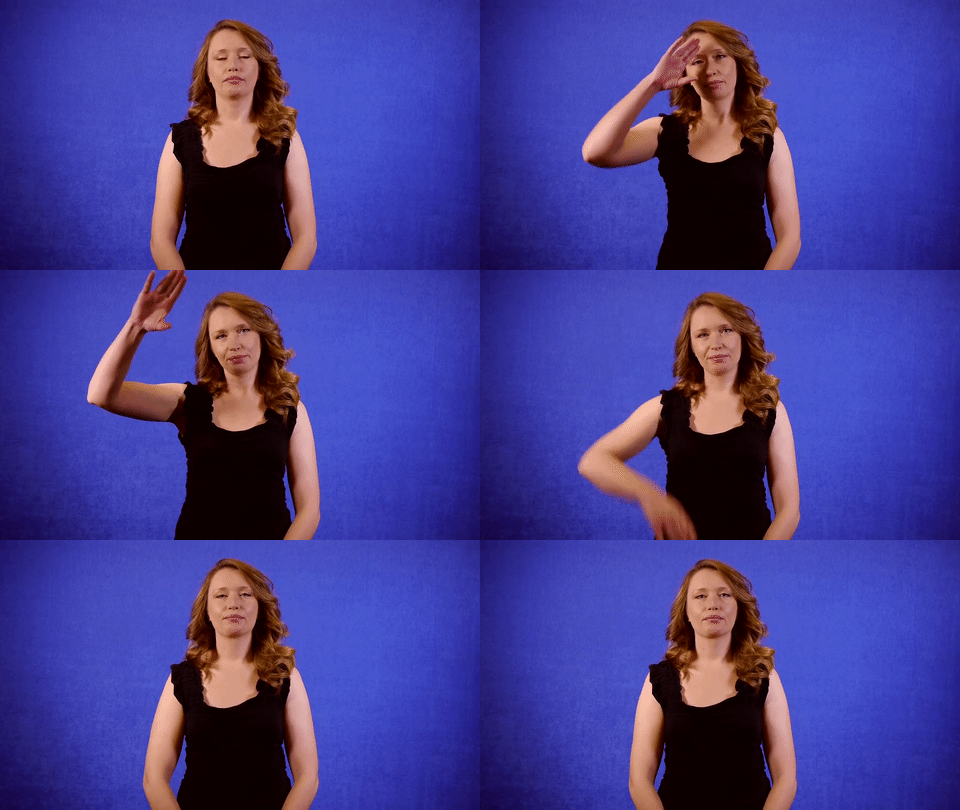
Definition: A greeting or expression of goodwill.
Sign for HELLO in ASL
Practice Activities:
Start practicing the sign for HELLO in ASL by standing in front of a mirror and rehearsing the sign in isolation. Focus on the movement of your dominant hand, making sure your fingers are together and you bring your hand outward from your forehead in a small salute-like motion. Repeat this motion several times while saying the word in your mind to build the connection between the motion and the meaning.
Once you’re comfortable with the basic sign for HELLO in ASL, try using it in short, simple sentences. Practice signing phrases like “hello, how are you?” or “hello, my name is…” Use a video camera or your phone to record yourself, then review for accuracy in handshape, position, and facial expression. Facial expression is important in ASL, so include a friendly smile as you sign.
Set up pair activities by greeting a family member or learning partner with the sign for HELLO in ASL and encouraging them to respond using signs they know. Swap turns greeting each other in different scenarios—meeting at school, at the grocery store, or at a park—to build fluency through context. Roleplay short dialogues that begin with the greeting, helping each person practice smooth transitions from greeting to conversation.
Create a storytelling prompt that begins with a greeting, such as “you walk into a room and see your old friend.” Begin your story using the sign for HELLO in ASL. Continue the story using any additional signs you know. This helps tie the vocabulary into wider communication skills.
To reinforce retention, play a flashcard game. Show a picture of a person waving or someone entering a room, and respond with the correct sign. This makes the repetition more engaging and reinforces the habit of using the sign for HELLO in ASL naturally and confidently.
Cultural Context:
The sign for HELLO in ASL is often one of the first signs people learn when beginning their journey into American Sign Language. It is a simple and widely recognized gesture, but its cultural context within deaf culture adds important depth and meaning.
In the world of ASL, greetings are more than just polite words. The sign for HELLO in ASL serves as a bridge between deaf and hearing communities, creating space for connection and mutual respect. When used properly, it shows awareness and willingness to engage with deaf culture.
Using the sign for HELLO in ASL can be important in many settings, including schools, hospitals, public events, and everyday conversation. It allows hearing individuals to approach deaf signers in a friendly and respectful way. A sincere hello in ASL can immediately create a vibe of acceptance and inclusion
Unlike verbal greetings in spoken English, the sign for HELLO in ASL can also take on different forms based on context and relationship. For example, close friends may use more informal or playful gestures to say hello. In more formal situations, the traditional salute-style sign is usually preferred.
Deaf culture places strong value on eye contact and physical presence. When you use the sign for HELLO in ASL, it’s important to make eye contact and show attentiveness. This visual connection is a key part of how relationships are built within the community.
The sign for HELLO in ASL may look simple, but its use shows respect for visual language and cultural identity. Many Deaf individuals appreciate when others take the time to learn even basic signs—especially greetings like this one. A respectful hello can open the door to deeper conversations and lasting connections.
Some families with Deaf or hard-of-hearing members teach the sign for HELLO in ASL to infants as part of baby sign language. This promotes early communication and bonding. It also shows how early exposure to ASL can shape positive cultural attitudes from a young age
Whether you’re greeting someone at a Deaf event or just saying hi to a friend, using the sign for HELLO in ASL sends a strong message of inclusion and care. It’s not just about the motion of the hand—it’s about recognizing and valuing someone’s language and identity.
In Deaf spaces, physical greetings often align with visual cues more than spoken ones. That’s why it’s important to be expressive when using the sign for HELLO in ASL. A friendly facial expression and clear sign go a long way in making a great
Extended Definition:
The sign for hello in ASL is one of the most recognized and friendly signs in American Sign Language. This simple gesture carries a powerful message of connection and welcome. It is often one of the first signs that new learners pick up when starting their ASL journey.
To create the sign for hello in ASL, begin with your dominant hand in a flat handshape. Place the fingertips near your forehead, similar to a salute, and then move your hand outward away from your head. This motion mimics the visual cue of waving hello but is rooted in ASL grammar and structure.
Hello in ASL can be used in both formal and casual situations. It’s commonly used in introductions, greetings, and any time you want to start a conversation. When paired with a friendly smile and eye contact, the sign becomes even more warm and inviting.
The sign for hello in ASL is not only practical, but it also helps build rapport within the deaf and hard of hearing community. By learning it, hearing individuals can take a valuable step toward inclusive communication. It’s a respectful way to acknowledge someone in a language that is visual and culturally rich.
In different regions or among certain groups, variations of the sign may occur, though the classic version remains widely understood. ASL is a living language, and signs can evolve, but the standard sign for hello in ASL remains consistent across many demographic areas.
Beginners often ask if waving counts as a sign. While waving is sometimes accepted in informal settings, it’s not considered the official or grammatical sign for hello in ASL. Learning the proper sign shows commitment to authentic communication.
The sign can be combined with fingerspelling a name or another greeting to personalize your introduction. For example, someone might sign hello in ASL and then spell their name right after. This flow maintains natural sign language etiquette and introduces both greeting and identity in one motion.
Children often enjoy learning the sign for hello in ASL because it’s easy and fun to perform. Parents and educators can teach this sign as part of early language development or inclusive curriculum. The visual, simple nature of the sign makes it perfect for introducing basic ASL vocabulary.
If you’re practicing the sign for hello in ASL, consider checking your hand position and motion in the mirror . This can help you master the sign accurately and confidently. Videos and native signers’ demonstrations can also improve your understanding and fluency.
Whether you are meeting someone face-to-face or communicating through video, starting with the
Synonyms: Hello, Hi, Greetings, Hey, Howdy
Educational resources: Find related learning materials in our course bank!
Want more? Check out some of our popular learning activities on the homepage!
Need to look up a sign? Use our highly rated dictionary: https://aslinteractive.com/best-asl-dictionary/
Follow us on tiktok: https://www.tiktok.com/@aslinteractive. More social media links at the bottom of this page!
Long-tail Keywords: what is the sign for hello in ASL, how do you sign hello in American Sign Language, teach me how to sign hello in ASL
Categories:
tags: greetings in ASL, basic ASL signs, conversational ASL, beginner ASL vocabulary, everyday ASL phrases
Parameters
*Handshape*:
The handshape for the sign for HELLO in ASL uses a flat hand with fingers together and the thumb extended slightly away from the palm. This is the same basic handshape as a salute gesture.
To make the sign for HELLO in ASL, start with the flat hand at the side of your forehead, palm facing out, and move it outward in a small arc. This simple gesture is a friendly and common way to greet someone in American Sign Language .
*Palm Orientation*:
The palm orientation for the sign for HELLO in ASL begins with the dominant hand open and fingers together. The palm is positioned flat and faces outward, away from the body, similar to a military-style salute.
As you perform the sign for HELLO in ASL, the fingertips start near the temple and move slightly away from the head in a casual, outward wave. The palm remains facing outward throughout the motion, maintaining a smooth and friendly gesture .
*Location*:
The sign for HELLO in ASL is performed near the side of the forehead, just above the temple. The location is similar to where a military salute occurs, emphasizing a polite and formal greeting.
This sign stays close to the head and does not move far from the face, which is essential to correctly convey the meaning. Understanding this specific forehead placement is important when learning the sign for HELLO in ASL to ensure clarity and accuracy.
*Movement*:
To produce the sign for HELLO in ASL, start with your dominant hand in a flat palm shape, similar to a military-style salute . Place your fingertips near your temple, above your eyebrow.
Then, make a short outward movement away from your head, almost like a wave. The motion is smooth and casual, as if you are greeting someone with a friendly gesture. The sign for HELLO in ASL is often used at the beginning of conversations or when entering a space.
*Non-Manual Signals*:
When performing the sign for HELLO in ASL, maintain a pleasant facial expression, often accompanied by a slight smile to convey friendliness and warmth. Keep eye contact with the person you’re greeting, as this adds to the welcoming nature of the sign.
Neutral head positioning or a slight nod can enhance the clarity of the sign for HELLO in ASL, especially when initiating a conversation. Avoid exaggerated facial expressions, as the sign is typically used in everyday, casual interactions.
*Prosody, Dominant/Non-Dominant Hand*:
The sign for HELLO in ASL uses the dominant hand only. Start with your dominant hand open in a flat-B shape, fingers together and thumb tucked in. Place the fingertips near your forehead, palm facing outward, then move the hand outward in a small arc away from your head, similar to a salute .
The non-dominant hand is not used in the sign for HELLO in ASL. This casual, friendly gesture is one of the most common greetings signed in American Sign Language and is usually accompanied by direct eye contact and a warm facial expression .
Tips for Beginners:
When learning the sign for HELLO in ASL, start by ensuring your handshape is correct. Use your dominant hand in a flat, open palm shape, with fingers together, and touch your fingers to your forehead before moving the hand outward in a small arc away from the head. Think of it like a simple salute, but with a relaxed wrist and smooth motion .
A great tip is to practice the sign in front of a mirror. This helps you catch any awkward angles or incorrect placements that others might interpret differently. The sign for HELLO in ASL should be fluid—not stiff or exaggerated. Keep your movement clean and friendly, as body language is super important in ASL!
Avoid twisting the wrist or signing too quickly. Signing too fast can make it unclear, especially to beginner or non-fluent signers. Additionally, remember that facial expressions add meaning to signs in ASL, so accompany the sign for HELLO in ASL with a welcoming smile .
Practice signing HELLO while greeting people throughout your day, even in casual settings at home or when watching TV. Repetition in context will reinforce muscle memory and boost your confidence in real-life interactions. Ask Deaf friends or classmates for feedback—they can point out subtle details that really improve fluency.
Another useful practice technique is including the sign in fingerspelling drills. For example, fingerspell a name, then sign HELLO. This imitates introductions, which commonly use the sign for HELLO in ASL.
Lastly, don’t be afraid to record yourself signing! Watching your own signing helps pinpoint what’s working and what needs adjustment. Stay patient, be consistent, and you’ll feel natural when using the sign for HELLO in ASL during everyday conversations.
sign for hello in asl, how to say hello in sign language, asl greeting signs, basic greetings in ASL, learn hello sign asl
Connections to Other topics:
The sign for HELLO in ASL is often one of the first signs that new learners encounter, introducing them to ASL structure and etiquette. This greeting sign closely mirrors a salute: a flat hand held near the forehead, moving outward. It is a formal or neutral greeting, unlike the casual hi, which uses a smaller, faster motion from the same handshape.
Understanding the sign for HELLO in ASL also opens the door to learning other social signs such as how-are-you, good morning, or nice to meet you. These often follow right after HELLO in typical conversations, helping learners understand sentence flow and interpersonal interaction in ASL. Greeting phrases in ASL rely heavily on facial expressions and body posture, both of which are crucial linguistic components in sign language.
The use of the sign for HELLO in ASL can also be tied to compound signs. For instance, combining HELLO with fingerspelled names or titles, such as HELLO + FS (DR. SMITH), is common in introductions. These combinations demonstrate how signs work together fluidly, particularly in the absence of spoken grammar.
HELLO is semantically linked to other context-specific greetings like good afternoon or welcome. Unlike spoken English, ASL uses directional signs and classifier constructions to create a rich greeting experience. For example, in a group setting, the signer may use a wide hand sweep along with the HELLO sign to indicate greeting everyone present.
Learning HELLO helps establish a foundational understanding of ASL’s spatial use and grammatical economy. It also introduces learners to polite etiquette in Deaf culture, where initiating contact with a respectful sign is preferred over tapping or waving. Mastering the sign for HELLO in ASL equips signers to confidently begin interactions with Deaf individuals and transition smoothly into various conversational topics.
Summary:
The sign for HELLO in ASL is a fundamental greeting, commonly used and easily recognizable. It uses elements of body orientation and facial expression, highlighting how ASL integrates emotion and politeness into movement.
To produce the sign, raise your dominant hand to your forehead, fingertips touching the side just above the temple. Then move your hand outward in a short arc away from the head, similar to a salute. Your palm should remain facing outward as your hand moves.
Facial expression is essential when signing HELLO, as it contributes to the tone of the greeting. A smile often accompanies the gesture, reinforcing its friendly and welcoming nature. In social interactions, especially in Deaf culture, facial cues carry just as much importance as handshape or motion.
The sign for HELLO in ASL is iconic and closely resembles a military-like wave, although it is softer and more casual in delivery. Most often, it’s used in both formal and informal settings, making it a versatile part of everyday Deaf communication. It’s often taught as one of the first signs to beginners due to its simplicity and frequency of use.
HELLO is often among the first signs learned by hearing individuals starting ASL study, serving as an entry into Deaf culture and visual language communication. Because it’s easy to perform and instantly useful in real-life situations, the sign allows new users to feel quickly engaged in conversations during Deaf events or ASL classes.
From a linguistic perspective, the sign for HELLO in ASL is an example of a non-iconic lexicalized form transitioning to iconic status in community teaching. While not derived from an English word phonetically, the sign’s gesture mirrors common wave gestures universally seen across cultures. This cross-cultural similarity aids beginners in quickly associating visual meaning with intent.
Grammatically, the sign for HELLO in ASL functions as a stand-alone greeting and does not change depending on tense or subject. It doesn’t require conjugation like its spoken English counterpart. Instead, context and facial expression provide the additional tone or inference around the greeting.
The dynamic and outward-facing movement of the sign reflects openness and engagement, both valued traits in Deaf socialization. A tone of approachability is vital, especially when initiating conversation in American Sign Language. HELLO is often the starting point of introductions, small talk, and deeper dialogue.
Deaf culture places emphasis on respectful greetings. The sign for HELLO in ASL is more than a pleasantry—it is a cultural signal. It marks the beginning of an interaction and affirms the other person’s presence and humanity in the space.
The classifier system in ASL doesn’t apply to the sign for HELLO directly, but the broader cultural and communicative role of the greeting situates it among signs that convey abstract social actions. The linguistic category is more pragmatic than syntactic, focusing on communicative function over grammatical structure.
There are variations that reflect regional or cultural differences within the Deaf community, though the motion generally remains consistent across the board. Some signers may offer a quick wave rather than the classic forehead-hand salute. This may occur especially in fast-paced or informal communication.
Children learning ASL often begin with the sign for HELLO before moving on to more complex syntax and morphology. Educators use the sign to build social interaction skills in young students. In ASL immersion classrooms, this sign becomes part of morning routines and start-of-day rituals.
In the context of applied linguistics, teaching the sign for HELLO in ASL offers insight into how learners process visual-motor communication compared to auditory-spoken language. It illustrates how gesture-based languages cognitively engage areas of the brain associated with both motion and language comprehension.
HELLO also acts as a bridge between hearing and Deaf communities. It invites non-signers into conversations through a universally welcomed first phrase. Many interpreters use it as the first sign during introductions when interpreting voice-to-sign translations of spoken greetings.
Interpretation settings often include the sign for HELLO in ASL during transitions or warm-ups for dialogue. The sign is also useful in theater and performance settings where visual introductions are essential. Its natural motion and clarity make it effective on stage and screen.
The sign is used digitally as well. In video chats among Deaf users, the sign for HELLO frequently opens webcam-based interactions. This underscores the sign’s continued relevance in tech-integrated conversations and telecommunications within the Deaf world.
Related signs include HI, which sometimes substitutes HELLO in very casual or informal environments. Despite looking similar, HI can feature a shorter, less stylized motion away from the forehead, with a quicker flick away. Both signs serve the same grammatical function as interjections.
Other related signs include GOOD MORNING, GOOD AFTERNOON, and GOOD EVENING, which may follow or replace HELLO in structured greetings. These signs help establish context and time of day for the interaction. HELLO is commonly paired with these for a full introduction.
In some settings, the HELLO sign is followed immediately by the sign for
Want more? Check out some of our popular learning activities!
ASL Interactive Resources
ASLInteractive YouTube Channel
Follow us on tiktok: @aslinteractive.com
Follow us on Instagram: aslinteractive
Facebook page: aslinteractive
Facebook group: aslinteractive
LInkedIn: ASL Interactive LLC
Twitter: @ASL_interactive
*Some information on this page is AI-generated. AI can make mistakes. Please check the information.


Responses