Sign for LOUD in ASL | ASL Dictionary

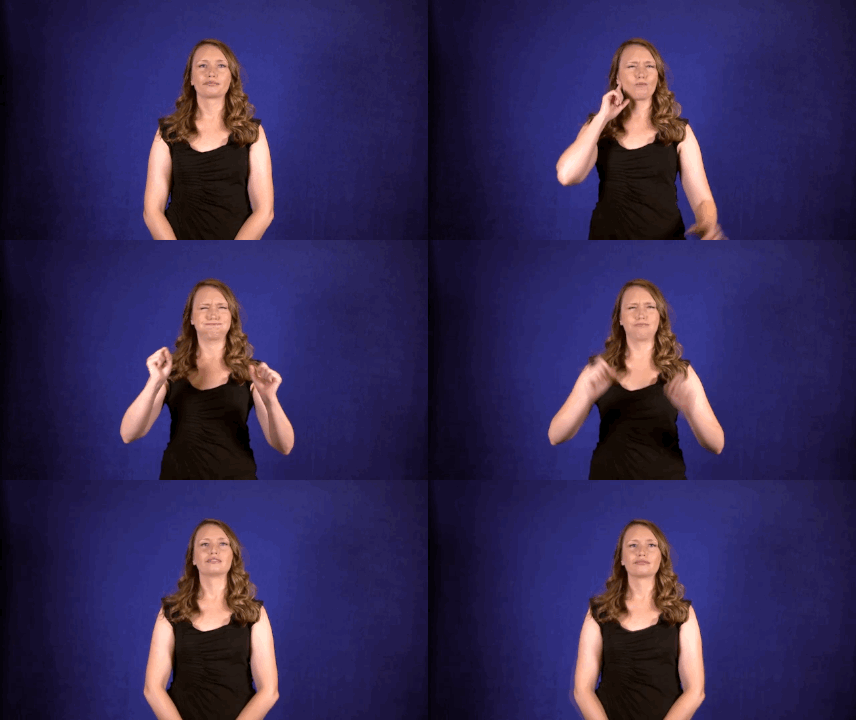
Definition: Producing a lot of noise. Sign for LOUD in ASL
YouTube player
Practice Activities:

Cultural Context:

Practice Activities To master the sign for LOUD in ASL, start by practicing in front of a mirror. Mirror work allows you to monitor your facial expressions, which are a crucial part of conveying intensity in ASL. The sign for LOUD in ASL involves not just hand movement but also expressive non-manual signals. Record yourself signing various sentences that include the sign for LOUD in ASL. This helps you observe your own signing speed, handshape accuracy, and whether your facial expressions match the meaning of the sign. Watching your recordings can also help you identify areas for improvement. Try using the sign in realistic scenarios. Pretend you’re describing a loud noise in a story, or reacting to a sudden loud sound. Practicing in context makes the sign for LOUD in ASL more memorable and helps you understand how to use it naturally in conversations. Advanced learners can incorporate this sign into storytelling drills. Create narratives involving different sound levels and emotions, switching between signs like LOUD, QUIET, and NOISY. This builds fluency and teaches you how to adjust your signing to match tone. If you have access to a Deaf conversation partner or ASL tutor, practice using the sign for LOUD in ASL during live interaction. Getting feedback from a fluent signer will fine-tune your accuracy and boost your confidence. SEO Cultural Context The sign for LOUD in ASL is more than just a translation of the English word—it reflects Deaf cultural values around communication and sensory experience. In the Deaf community, sound is often perceived through vibrations or visual cues, rather than heard. Therefore, the concept of “loud” is communicated not only through the handshape but also through facial expression and body language. Deaf culture places strong emphasis on visual clarity. When using the sign for LOUD in ASL, exaggerated facial expressions are appropriate and expected. This expresses the intensity of the sound, which is important since the Deaf experience of “loudness” is different from that of hearing individuals. Regional variations of the sign may exist. In some areas, the sign for LOUD in ASL may use a slightly different motion or may be combined with signs for NOISE or SHOUT depending on the context. It’s always a good idea to observe how native signers in your area express this concept. The sign is commonly used in educational settings, storytelling, and day-to-day interactions. For example, a teacher might use the sign for LOUD in ASL to describe a fire alarm during a safety drill or to describe a child speaking loudly during class. Extended Definition The sign for LOUD in ASL typically involves a dominant hand in an “S” handshape tapping near the ear or making a motion outward from the ear while accompanied by a strong facial expression. This indicates the intensity or volume of a sound. The sign may also include a puffed cheek or widened eyes to emphasize the loudness. This sign is often confused with signs for NOISY or SHOUT, but each has a distinct form and usage. SHOUT usually involves more forceful movement away from the mouth, while NOISY may involve both hands moving in the air to indicate a chaotic sound environment. Understanding these subtle differences is key to using the sign for LOUD in ASL correctly. Another common mistake is underplaying the facial expression. If facial cues are neutral or mismatched, the sign can be misunderstood or lose its intended meaning. Always pair the sign with expressive eyes, eyebrows, and mouth movements to emphasize volume or intensity. Some learners also confuse the location of the sign. While signs like HEAR or SOUND are made near the ear, the sign for LOUD in ASL often starts near the ear but moves outward, showing amplification. Placement and motion are essential to accurate communication. Tips for Beginners If you’re just starting to learn the sign for LOUD in ASL, don’t worry if your expression feels exaggerated. In ASL, facial expressions are a part of the grammar. It’s okay to feel dramatic—it actually helps convey meaning more clearly. Begin by learning the handshape and motion slowly. Practice the sign in isolation before trying it in full sentences. Repetition is key, so don’t rush the process. Avoid the common mistake of keeping your face still while signing. The sign for LOUD in ASL requires strong non-manual markers. Practice in front of a mirror and try to match the emotion behind the sign. Another tip is to watch Deaf signers in videos or vlogs. Observe how they use the sign for LOUD in ASL in natural conversation. Mimicking their expressions and pacing can help you internalize the rhythm of fluent signing. Stay patient and consistent. It can be tempting to focus only on vocabulary, but ASL is a visual language that includes so much more than just hand signs. Your progress will accelerate as you practice both form and function together. Connections to Other Topics The sign for LOUD in ASL is closely related to the sign for QUIET. Both deal with sound levels and are often used together for contrast. Understanding this pair helps build your vocabulary around sound and volume. Another related sign is SHOUT. While similar in meaning, SHOUT emphasizes the action of vocalizing loudly, whereas LOUD can describe a variety of loud sounds. Learning both helps clarify context during conversations. The sign for NOISE also connects to this topic. It’s often used to describe an environment filled with sound, such as a noisy room or a crowd. Knowing how to switch between NOISE and LOUD gives you more flexibility in expression. You’ll also find that the sign for LOUD in ASL appears often in storytelling. ASL storytelling uses visual exaggeration, so this sign is a great tool for describing action scenes or emotional responses to sound. Lastly, the sign relates to ASL grammar topics like intensity and facial grammar. Learning how to modify the sign for LOUD in ASL with your face and body introduces you to the broader concept of non-manual signals, which are key to fluency. Lengthy Summary The sign for LOUD in ASL is an expressive and dynamic sign that relies heavily on both hand movements and facial expression. This makes it a perfect example of how ASL differs from spoken languages—not just in vocabulary, but in the way meaning is structured visually. Whether you’re describing a loud noise, a person speaking loudly, or a dramatic moment in a story, this sign helps you communicate intensity and emotion. Practicing the sign for LOUD in ASL through mirror work, recordings, and real-world context develops both your technical skill and confidence. As you progress, you’ll begin to use the sign more naturally and with greater precision. Advanced drills and storytelling can take your use of this sign to the next level, helping you internalize expressive techniques used by native signers. Culturally, the sign for LOUD in ASL holds special significance. It reflects the Deaf community’s unique relationship with sound and the importance of visual communication. While regional variations may exist, the overall concept remains rooted in a visual-spatial understanding of intensity. Beginners learning the sign for LOUD in ASL should focus on clear handshape, motion, and especially facial expression. Avoiding common mistakes like neutral expressions or incorrect placement will make your signing more accurate and expressive. Watching native signers and practicing consistently will help you overcome initial challenges. This sign also connects to a broader network of ASL vocabulary and grammar. Learning related signs like SHOUT, QUIET, and NOISE expands your ability to describe sound and emotion. It also deepens your understanding of non-manual signals, which are essential to becoming fluent in ASL. As you continue your ASL journey, let the sign for LOUD in ASL be a reminder of the beauty of visual language. Keep practicing, stay engaged with the Deaf community, and don’t be afraid to express yourself fully. Your efforts will lead to deeper understanding and more meaningful communication. Keep signing!

Extended Definition:

Synonyms: noisy, boisterous, deafening, thunderous, blaring Educational resources: Find related learning materials in our course bank! Want more? Check out some of our popular learning activities on the homepage! Need to look up a sign? Use our highly rated dictionary: https://aslinteractive.com/best-asl-dictionary/ Follow us on tiktok: https://www.tiktok.com/@aslinteractive. More social media links at the bottom of this page! Long-tail Keywords: what is the sign for loud in asl, how do you sign loud in asl, asl sign for loud Categories: tags: volume and sound signs, adjectives in ASL, emotions and descriptions in ASL, beginner ASL vocabulary, expressive ASL signs

Tips for Beginners:

Connections to Other topics:

Summary:

Want more? Check out some of our popular learning activities!

ASL Interactive Resources

ASLInteractive YouTube Channel

Follow us on tiktok: @aslinteractive.com

Follow us on Instagram: aslinteractive

Facebook page: aslinteractive

Facebook group: aslinteractive

LInkedIn: ASL Interactive LLC

Twitter: @ASL_interactive

*Some information on this page is AI-generated. AI can make mistakes. Please check the information.  

Responses