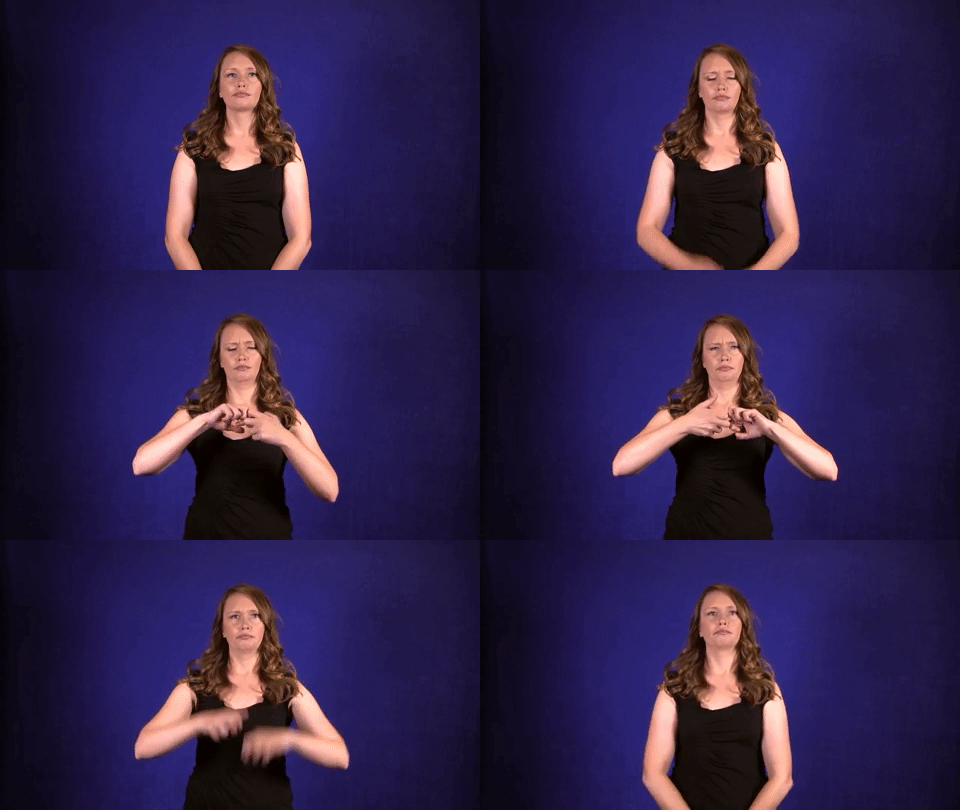
Sign for PROBLEM in ASL | ASL Dictionary

Definition: A matter or situation regarded as unwelcome or harmful.

Sign for PROBLEM in ASL

YouTube player

Practice Activities

To master the sign for PROBLEM in ASL, it’s essential to engage in a variety of practice activities that reinforce both accuracy and fluency. Start with mirror work by standing in front of a mirror and signing while observing your handshape, palm orientation, and movement. This helps you self-correct and build muscle memory.

Another effective method is recording yourself signing. Play back the video to evaluate your form, clarity, and facial expressions. Compare your recording with videos of fluent signers using the sign for PROBLEM in ASL to identify areas of improvement.

Signing in context is also vital. Practice the sign during everyday conversations or role-play situations where a problem might arise, such as asking for help or discussing a challenge. You can also describe problems you faced during the day using ASL, which helps integrate the sign naturally into your communication.

Advanced learners can try drills that incorporate the sign for PROBLEM in ASL into longer sentences or question forms. For example, sign complex sentences like “What’s the problem?” or “Can you fix this problem?” to develop greater fluency. Partner practice is another powerful tool—interacting with peers or mentors helps simulate real-life communication and encourages spontaneous use of the sign.

SEO Cultural Context

Understanding the cultural context of the sign for PROBLEM in ASL deepens your appreciation of its usage. In Deaf culture, direct and clear communication is highly valued. When someone uses the sign for PROBLEM in ASL, it is often part of a straightforward exchange about something that needs attention or resolution.

The sign is commonly used in both casual and formal settings. For example, it might be used in a classroom to alert a teacher to a technical issue, or in a conversation with a friend to share a personal difficulty. Because ASL is a visual language deeply rooted in the Deaf community, signs like PROBLEM often carry more than just literal meaning—they can reflect the signer’s feelings or urgency through facial expressions and body posture.

There may be slight regional variations in how the sign is executed. In some areas, the movement may be more pronounced or the handshape slightly adjusted. However, the core concept remains the same. Knowing this helps learners stay open to variation while maintaining clear communication.

Extended Definition

The sign for PROBLEM in ASL typically involves both hands in modified “C” or curved handshapes. The fingertips of each hand touch and twist against each other, often in a double movement. The motion can vary slightly depending on the signer, but it generally mimics a twisting or entangled motion, symbolizing a complication or issue.

This sign is conceptually linked to ideas like confusion, difficulty, or obstacle. It’s important not to confuse it with other signs such as QUESTION or IDEA, which use different handshapes and motions. A common error for beginners is using the wrong orientation or failing to produce the twisting motion clearly, which can lead to misunderstandings.

Learners should also be aware of how facial expressions enhance the meaning of the sign for PROBLEM in ASL. A furrowed brow or look of concern adds emotional context and can indicate the severity of the problem being discussed.

Tips for Beginners

If you’re just starting to learn the sign for PROBLEM in ASL, don’t worry if it feels awkward at first. Like any new motor skill, it takes repetition and focused effort to become comfortable. Start by slowly practicing the handshape and motion until it feels natural.

One common mistake is rotating the hands in the wrong direction or not aligning the fingertips correctly. Watching videos of fluent signers can help you get a better sense of natural movement and positioning. Practicing in front of a mirror will also help you ensure that your sign is clear and accurate.

Remember to use your face! In ASL, facial expressions are a key part of grammar and meaning. When using the sign for PROBLEM in ASL, your facial expression should match the idea of dealing with a difficulty. This makes your communication more authentic and easier for others to understand.

Connections to Other Topics

The sign for PROBLEM in ASL is part of a broader network of vocabulary associated with challenges and solutions. One related sign is SOLUTION, which typically follows naturally in conversations where a problem has been identified. Learning both signs together can help you express complete thoughts more effectively.

Another useful connection is the sign for CONFUSED, which often appears in similar contexts. Both signs involve facial expressions that show uncertainty or concern, reinforcing the visual nature of ASL grammar.

You may also encounter the sign for FIX or HELP in the same conversations as the sign for PROBLEM in ASL. These signs expand your ability to describe actions taken in response to a problem, making your communication more dynamic and informative.

Additionally, the sign for QUESTION is related in that it often precedes or follows a discussion about a problem. Learning how to integrate these signs into longer sentences will help you express yourself more fully and naturally in ASL.

Lengthy Summary

The sign for PROBLEM in ASL is a powerful and frequently used sign that allows Deaf and signing individuals to express challenges, complications, or issues in a variety of settings. Whether you’re in a classroom, workplace, or casual conversation, this sign helps anchor discussions around difficulty and invites solutions.

Practicing the sign through mirror work, recorded feedback, contextual use, and advanced drills ensures that learners develop both accuracy and fluency. Engaging with the cultural context behind the sign for PROBLEM in ASL also builds respect and understanding for the values of the Deaf community, such as clarity, directness, and expressive communication.

By exploring the extended definition, learners can avoid common errors and distinguish the sign from similar signs. Understanding its related signs—like SOLUTION, CONFUSED, FIX, and HELP—creates a more comprehensive vocabulary for discussing problems and responses.

For beginners, the key to success is patience, consistency, and attentiveness to both hand movement and facial expressions. Even if the sign for PROBLEM in ASL feels challenging at first, regular and mindful practice leads to confidence and clarity over time.

Learning this sign opens the door to more nuanced conversations and deeper cultural understanding. Keep practicing, stay curious, and don’t be afraid to make mistakes. Every time you use the sign for PROBLEM in ASL, you’re building essential communication skills and connecting more deeply with the ASL community. ✨

Synonyms: issue, difficulty, challenge, obstacle, complication

Educational resources: Find related learning materials in our course bank!

Want more? Check out some of our popular learning activities on the homepage!

Need to look up a sign? Use our highly rated dictionary: https://aslinteractive.com/best-asl-dictionary/

Follow us on tiktok: https://www.tiktok.com/@aslinteractive. More social media links at the bottom of this page!

Long-tail Keywords: what is the sign for problem in ASL, how do you sign problem in ASL, ASL sign for problem

Categories:

tags: ASL problem signs, problem-related ASL vocabulary, conflicts in ASL, challenges in American Sign Language, troubleshooting ASL signs

Want more? Check out some of our popular learning activities!

ASL Interactive Resources

ASLInteractive YouTube Channel

Follow us on tiktok: @aslinteractive.com

Follow us on Instagram: aslinteractive

Facebook page: aslinteractive

Facebook group: aslinteractive

LInkedIn: ASL Interactive LLC

Twitter: @ASL_interactive

*Some information on this page is AI-generated. AI can make mistakes. Please check the information.


Responses