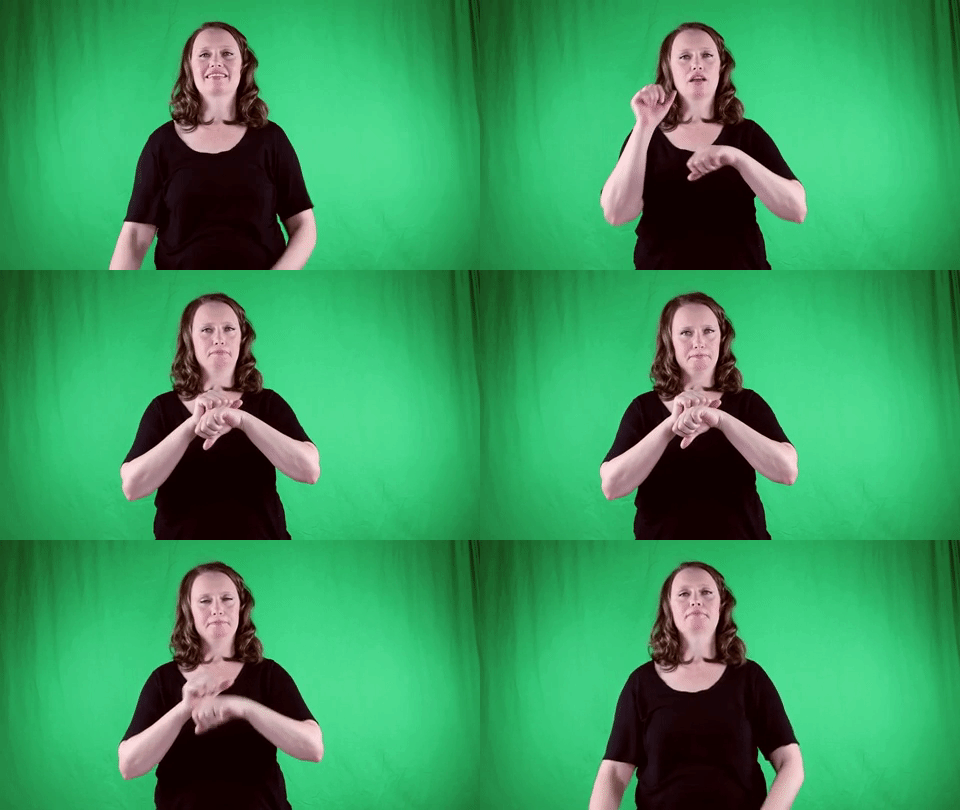
Sign for ROCK in ASL | ASL Dictionary

Definition: A solid mineral material. Sign for ROCK in ASL
YouTube player

Practice Activities

To master the sign for ROCK in ASL, it’s essential to engage in consistent and varied practice. Start with mirror work by signing the word while watching yourself. This helps build muscle memory and ensures your handshape and motion are accurate. Pay close attention to the non-manual signals, like facial expressions, which may not be a huge part of this specific sign but are fundamental in ASL communication. Recording yourself signing the sign for ROCK in ASL can also be very effective. Watch the playback to analyze your hand position, movement, and clarity. Compare your video with reliable video dictionaries or Deaf signers to spot and correct any differences. This self-review process helps reinforce correct usage and build confidence. Use the sign in real-world contexts. For example, describe natural settings using ASL, such as a beach with rocks or a mountain with rocky terrain. Use the sign for ROCK in ASL during storytelling or conversations to make your practice more dynamic and meaningful. The more you use it in context, the more naturally it will become part of your vocabulary. For more advanced learners, try drills that incorporate multiple signs in sequence. Combine the sign for ROCK in ASL with related signs like STONE, MOUNTAIN, or HARD. Practicing transitions between signs helps build fluency and encourages you to think in ASL rather than translating from English.

SEO Cultural Context

In Deaf culture, using the correct sign for ROCK in ASL is a matter of both linguistic accuracy and cultural respect. ASL is a visual language deeply rooted in the Deaf community, and each sign carries meaning that reflects lived experience and collective understanding. The sign for ROCK in ASL is typically used to describe physical elements in nature, such as stones, boulders, or rocky landscapes, but it can also appear in metaphorical contexts depending on the conversation. There may be slight regional variations in how the sign is produced. For example, some communities may use a more circular movement or emphasize the handshape differently. However, the core concept remains consistent across most areas in the United States. Being aware of and respectful toward these variations is key in culturally competent communication. In real-life situations, the sign for ROCK in ASL might be used during classroom lessons about geology, in storytelling settings when describing environments, or simply in casual conversation when talking about hiking or outdoor activities. Understanding when and how to use the sign enriches your ability to engage naturally and respectfully with Deaf individuals.

Extended Definition

The sign for ROCK in ASL typically involves a motion that mimics the solidity and weight of a rock. The dominant hand forms an “S” handshape and taps on the back of the non-dominant hand, which is also in an “S” handshape. This motion symbolizes the hardness and stability associated with rocks. The gesture is quick but firm, conveying the tactile qualities of the object. It’s important not to confuse the sign for ROCK in ASL with similar signs like STONE or PEBBLE. While they may share handshapes or movement patterns, each carries a distinct meaning. STONE may involve a smaller or more delicate motion, reflecting the smaller size compared to a rock. Using the wrong sign can lead to miscommunication or confusion, especially in academic or descriptive contexts. Common errors include using the wrong handshape, such as a flat hand instead of an “S” handshape, or producing the motion too loosely, which can change the meaning. Another frequent mistake is placing the signs too high or too low in the signing space. Keeping the sign at a neutral torso height helps maintain clarity and visual accessibility.

Tips for Beginners

If you’re new to ASL, learning the sign for ROCK in ASL can be a great way to build your vocabulary around natural elements. One tip is to focus on mastering the correct “S” handshape with both hands. Practicing this handshape in isolation can help build the muscle control needed for a clear and accurate sign. Try not to overthink the motion. Many beginners exaggerate the movement or tap too hard. The gesture should be firm but not aggressive. Think of how you would naturally mimic the heaviness of a rock using your hands—this intuitive sense often leads to more authentic signing. Another common issue is forgetting to maintain eye contact or facial expressions. While the sign for ROCK in ASL doesn’t require intense non-manual markers, maintaining visual engagement with your conversation partner is a core part of ASL grammar and etiquette. Don’t worry if your sign isn’t perfect at first—fluency comes with time, repetition, and positive reinforcement.

Connections to Other Topics

The sign for ROCK in ASL connects closely to the sign for STONE. Both involve similar handshapes and are used to describe types of solid natural materials. Understanding the distinction between these signs can help build more nuanced vocabulary around earth science or environmental topics. Another related sign is MOUNTAIN, which often incorporates the sign for ROCK as a foundational element. This illustrates how ASL builds complex ideas by combining simpler signs, a concept known as compounding. Recognizing these connections helps learners see how ASL is structured and how meaning expands through combination. The sign for HARD is also conceptually linked. While it’s not signed the same way, both signs express tactile or abstract ideas of solidity and resistance. Practicing these signs together can help reinforce differences in handshape and movement while deepening understanding of descriptive language in ASL. Consider also the broader category of EARTH or NATURE signs. These include signs like TREE, WATER, and DIRT, which often appear in environmental conversations or storytelling. Learning them alongside the sign for ROCK in ASL enables more expressive and context-rich communication. Finally, the sign for MUSIC may seem unrelated, but in some contexts, the word “rock” refers to a genre. In such cases, the sign for ROCK in ASL changes dramatically and aligns with the sign for ROCK MUSIC, which involves a different set of gestures. This dual meaning highlights the importance of context and the rich layers of meaning in ASL.

Lengthy Summary

The sign for ROCK in ASL is a foundational vocabulary term that opens the door to a wide range of conversations about nature, science, and the environment. Using a double “S” handshape and a tapping motion, the sign visually represents the hardness and permanence of a rock. While simple in appearance, this sign offers a valuable opportunity to practice precision, clarity, and contextual awareness. Culturally, the sign for ROCK in ASL is part of a broader system of natural world vocabulary that reflects the Deaf community’s connection to the environment and lived experience. By learning this sign, you’re not just gaining a word—you’re participating in a visual language that communicates ideas with depth and nuance. Respect for regional variation and attention to cultural context ensures that your use of the sign is both accurate and respectful. For beginners, mastering this sign builds confidence and supports the development of foundational ASL skills like handshape control and spatial awareness. Common mistakes, such as incorrect handshape or movement, can be avoided with regular practice using mirrors, recordings, and contextual use. Engaging with related signs like STONE, MOUNTAIN, and HARD enhances vocabulary and reveals how ASL constructs meaning through visual and spatial patterns. Whether you’re engaging in nature-themed discussions, storytelling, or learning about geology, the sign for ROCK in ASL is a versatile and essential part of your signing toolkit. Practice it regularly in conversation, drills, and expressive contexts to reinforce your learning. Keep exploring connected signs and stay curious about how ASL conveys the world around us. Continue building your ASL skills by incorporating the sign for ROCK in ASL into your daily practice. Every new sign you learn adds richness to your ability to communicate and connect. Keep signing, stay motivated, and enjoy the journey of learning this beautiful visual language. Synonyms: stone, boulder, pebble, gravel, cobblestone Educational resources: Find related learning materials in our course bank! Want more? Check out some of our popular learning activities on the homepage! Need to look up a sign? Use our highly rated dictionary: https://aslinteractive.com/best-asl-dictionary/ Follow us on tiktok: https://www.tiktok.com/@aslinteractive. More social media links at the bottom of this page! Long-tail Keywords: what is the sign for rock in ASL, how do you sign rock in ASL, ASL sign for rock Categories: tags: rock sign ASL, geology signs ASL, nature signs in ASL, common ASL vocabulary, earth-related ASL signs

Want more? Check out some of our popular learning activities!

ASL Interactive Resources

ASLInteractive YouTube Channel

Follow us on tiktok: @aslinteractive.com

Follow us on Instagram: aslinteractive

Facebook page: aslinteractive

Facebook group: aslinteractive

LInkedIn: ASL Interactive LLC

Twitter: @ASL_interactive

*Some information on this page is AI-generated. AI can make mistakes. Please check the information.  

Responses