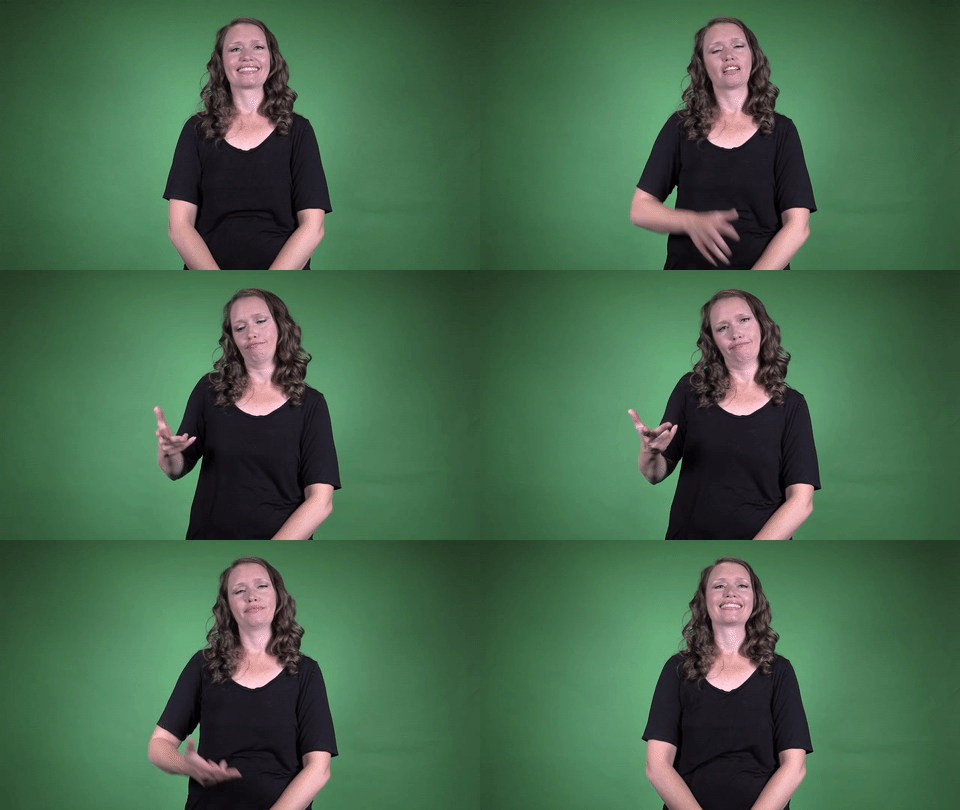
Sign for BOWL in ASL | 🥣 ASL Dictionary

Definition: A round, deep dish used for food.

Sign for BOWL in ASL

YouTube player

Practice Activities:

To build fluency with the sign for BOWL in ASL, begin by practicing the sign repeatedly in front of a mirror. Focus on creating a curved shape with both hands to mimic the bowl’s round shape. Pay close attention to the size and movement of your hands to ensure accuracy.

Next, incorporate the sign for BOWL in ASL into short, signed phrases such as “big bowl,” “small bowl,” or “empty bowl.” These help reinforce the concept through different contexts. Practice transitioning smoothly into and out of the sign when used with common objects like soup, cereal, or rice.

Create simple sentences using the sign for BOWL in ASL, such as “I need a bowl,” “The bowl is red,” or “She washes the bowl.” Practice signing these out loud and then silently to build both expressive and receptive skills.

Use storytelling as a way to explore the sign for BOWL in ASL. Tell a short narrative, for example, about preparing a meal using bowls of different sizes. Describe what goes in the bowl, where it is placed, or how it is used. This helps with vocabulary building and concept clarity.

Partner practice is also useful. One partner can describe an item or situation using the sign, and the other guesses or signs a response. For example, one person signs “I put fruit in the bowl,” and the other responds with “You have a fruit bowl.” This improves comprehension and expressive speed.

As a final reinforcement, walk around your kitchen or dining area and locate real-life examples of bowls. Sign what you see aloud: “blue bowl,” “metal bowl,” “salad bowl.” This daily practice anchors the sign to real-world objects for better retention.

Cultural Context:

In American Sign Language (ASL), many everyday items have a distinct sign that reflects not only the item’s shape or use, but also cultural connections within the Deaf community. The sign for BOWL in ASL is a great example of how signs are visually descriptive and tied to function or real-world interaction. When using the sign for BOWL in ASL, the hands mimic the curved, open shape of a bowl, helping to convey both its physical form and common use.

The sign for BOWL in ASL is often used during conversations about food, cooking, and shared meals. Bowls are central to many meals like salads, soups, noodles, and rice—foods commonly discussed in familial and social settings. Understanding how to sign bowl helps users engage in fluent conversations about mealtimes, recipes, and kitchen routines in ASL.

Within Deaf culture, meal-sharing and group gatherings play an important role in community bonding. Knowing the sign for BOWL in ASL allows Deaf individuals to clearly express ideas related to meal preparation, serving dishes, and discussing dietary preferences or recipes. Accessible communication around food is vital, and bowl is one of many signs that supports this important interaction.

Children learning ASL often associate the sign for bowl with basic vocabulary around eating, feeding, and identifying kitchen tools. It is a useful sign for building foundational language skills in both Deaf and hearing children using sign language for early education. Using the sign for BOWL in ASL during mealtimes helps reinforce vocabulary and naturally introduces the concept of food items through routine.

For Deaf adults, the use of the sign for BOWL in ASL may come up in restaurant settings, casual conversations about daily life, or during shopping trips when looking for kitchenware. It can be particularly useful in sign-supported environments like cooking classes or food demonstrations. The sign is practical, recognizable, and a staple in everyday conversations.

Because bowls are used universally across many cultures, the sign for BOWL in ASL doesn’t rely strongly on cultural symbolism, but focuses on shared visual understanding. This neutral design makes it easy for individuals from various backgrounds to learn and use effectively. Whether mixing ingredients, serving cereal, or decorating with fruit bowls, the sign supports a wide range of communication scenarios.

Parents and caregivers also find the sign for BOWL in ASL helpful for encouraging independent communication in children. It supports routines such as snack time and breakfast, allowing young signers to make simple requests and express preferences. In this way, the sign becomes a functional

Extended Definition:

The sign for bowl in ASL refers to a common and useful sign that helps in everyday communication, especially during meals or when discussing kitchen items. This sign is typically used when talking about serving food, cooking, or describing objects like cereal bowls, soup bowls, and mixing bowls. It’s a practical sign that you’ll see used across various contexts at home, in restaurants, and in educational settings.

To make the sign for bowl in ASL, start by placing both hands in a cupped shape, palms facing up. Position your hands together and then move them apart in an arc, as if outlining the shape of a bowl. This motion and hand shape visually represent the object, making it an iconic sign that is easy to remember for both beginners and fluent users.

Using the sign for bowl in ASL is especially common during mealtime discussions or when teaching young children about different kitchen items. It is also useful in Deaf and hard-of-hearing classrooms or when teaching American Sign Language to non-signers. Since a bowl is such a familiar object, learning its sign is often part of early vocabulary building in ASL classes.

The sign for bowl in ASL can also be paired with other food signs to create more specific phrases, such as cereal bowl, fruit bowl, or mixing bowl. This combination helps make conversations more dynamic and context-rich. When using ASL in natural settings, such compound signs help express more detailed meanings with clarity.

Because the concept of a bowl covers multiple objects, knowing this sign extends your ability to describe shapes, sizes, and actions related to food preparation. For example, if you are explaining how to mix ingredients in a bowl, the sign becomes a key part of that communication. The visual and spatial nature of ASL helps make such actions intuitive and understandable.

For children learning the sign for bowl in ASL, using real-life props can be very effective. They can practice signing bowl while holding one, helping to associate the physical object with the hand movement. Educators often use this method to reinforce vocabulary and ensure the sign sticks through hands-on experience.

Another excellent way to practice the sign for bowl in ASL is during story time or cooking activities. Using the sign in context strengthens retention and increases confidence. This method also introduces how the sign can be used in sentences such as I have a bowl of soup or The bowl is on the table.

Understanding how to use the sign for bowl in ASL in different grammatical contexts also boosts language fluency.

Synonyms: dish, container, basin, vessel, receptacle

Educational resources: Find related learning materials in our course bank!

Want more? Check out some of our popular learning activities on the homepage!

Need to look up a sign? Use our highly rated dictionary: https://aslinteractive.com/best-asl-dictionary/

Follow us on tiktok: https://www.tiktok.com/@aslinteractive. More social media links at the bottom of this page!

Long-tail Keywords: what is the sign for bowl in asl, how do you sign bowl in american sign language, asl sign for bowl

Categories:

tags: Objects, Kitchenware, Sports, Cooking, Dining

Parameters

*Handshape*:

The handshape for the sign for BOWL in ASL involves both hands using a curved or cupped “C”-handshape, with palms facing each other. The fingertips of both hands point slightly upward and are brought together in front of the body to form the shape of a bowl.

This curved handshape visually mimics the rounded form of a bowl . The sign for BOWL in ASL uses the hands to trace an imaginary outline, helping to reinforce the meaning through its shape and form.

*Palm Orientation*:

The palm orientation for the sign for BOWL in ASL starts with both hands open and cupped, palms facing up toward the ceiling. The fingertips of both hands face slightly inward toward each other as the hands move in an upward arc to outline the shape of a bowl.

This motion mimics the appearance of a bowl and helps visually reinforce the sign for BOWL in ASL . The palms remain relaxed and curved to maintain the rounded form throughout the movement.

*Location*:

The sign for bowl in ASL is typically produced in the neutral space in front of the torso. Both hands are used, open and curved, facing each other about shoulder-width apart. The hands move slightly upward and inward as if outlining the shape of a bowl.

This motion is held at mid-torso level, away from the body but not extended too far forward. The sign for bowl in ASL stays comfortably within the signing space near the chest.

*Movement*:

To perform the sign for BOWL in ASL, start with both hands in open curved shapes, palms facing each other with fingers slightly spread. Position the hands in front of the body, around waist level.

Move the hands upward and outward in a small, semi-circular motion, as if outlining the shape of a bowl. The sign subtly mimics the form of a round container, helping to visually reinforce the sign for BOWL in ASL .

*Non-Manual Signals*:

When demonstrating the sign for BOWL in ASL, the facial expression remains neutral and relaxed, as the sign conveys a simple noun with no emotional intensity. The eyes should follow the motion of the hands briefly to enhance clarity.

Ensure your brows are neutral and your lips are slightly parted or relaxed, showing a natural, effortless demeanor. This subtle non-manual signal keeps the sign for BOWL in ASL clean and focused on the handshape and motion.

*Prosody, Dominant/Non-Dominant Hand*:

The sign for BOWL in ASL uses two curved hands to mimic the shape of a bowl. Both hands, with palms facing up and fingers slightly apart, move in a semi-circular motion away from each other, forming an invisible container shape. The dominant and non-dominant hands work together symmetrically.

This movement visually represents holding or outlining a bowl. When signing the sign for BOWL in ASL, keep the movement smooth and contained to show the outline of the object clearly .

Tips for Beginners:

When learning the sign for BOWL in ASL, start by focusing on your handshape and fluidity. This sign uses both hands in a modified “C” shape, with palms facing each other, and they sweep outward in a circular motion to show the shape of a bowl. It’s important to maintain symmetry and smoothness in the motion to ensure your signing is clear and natural.

A common issue beginners face with the sign for BOWL in ASL is making the movement too mechanical or stiff. Think about actually tracing the shape of a bowl with your hands—this visualization helps make the sign more accurate and intuitive. Make sure both hands are level with each other and that the motion is even on both sides.

Be aware of facial expressions as you practice. Although the sign for BOWL in ASL does not inherently carry emotion, neutral facial expressions help reinforce that your focus is simply conveying the object. Avoid exaggerated expressions unless the context of the conversation calls for it, such as excitement about food or mealtime.

Practice the sign in front of a mirror so you can self-correct any asymmetry or stiffness. Also, record yourself signing short phrases about kitchen or dining-related subjects to reinforce real-life usage. Over time, aim to increase fluency by incorporating this sign when talking about “soup bowl,” “salad bowl,” or any other relative context.

Lastly, try not to mix up the sign for BOWL in ASL with similar signs like CUP or PLATE. Each has distinct motions and hand shapes, so practicing each individually and then comparing them can boost confidence and clarity. Consistency and daily review will go a long way toward mastering everyday vocabulary like this essential kitchen item. ️

sign for BOWL in ASL, learn sign for BOWL in ASL, how to do sign for BOWL in ASL, ASL sign for BOWL, what is the sign for BOWL in ASL

Connections to Other topics:

The sign for BOWL in ASL connects to several core concepts such as container-related signs and classifiers. It is visually iconic, reflecting the shape of a bowl formed by cupped hands, which builds recognition for learners when identifying other vessel-related signs. This visual connection can be extended to signs like CUP, PLATE, POT, or PAN, where handshapes and spatial orientation often mimic the dimensions or function of the item.

This sign also appears in compound phrases where it modifies meaning based on context. For instance, when combined with signs for FOOD or SALAD, the sign for BOWL in ASL helps express a more specific meaning like SALAD BOWL or FOOD BOWL. These types of compounded expressions are common in ASL due to its highly contextual and spatial nature.

The use of classifiers also relates strongly to this sign. The concept of a bowl can be represented using a “CL: C” handshape or “CL: Bent-5” to describe its size, depth, or how it’s handled or moved. In storytelling or descriptive signing, these classifiers allow signers to show how something is placed in, taken out of, or interacts physically with a bowl, helping to bring depth and visual richness to a conversation.

The sign for BOWL in ASL also provides a useful entry point into discussions about cooking, meals, and dining etiquette in Deaf culture. It’s particularly useful when discussing how food is served or shared, linking to signs like SOUP, CEREAL, or NOODLES, which are often eaten from a bowl. Understanding its use can help learners fluently describe typical mealtime interactions.

The spatial features of this sign also aid in teaching aspects like possession and quantity. For example, adding classifiers or number signs before or after helps quantify how many bowls are involved in a scenario, reinforcing grammar structures in ASL tied to number incorporation and plural forms.

Summary:

The sign for BOWL in ASL is a visually iconic representation rooted in the shape and concept of a bowl. The gesture mimics forming a rounded shape with both hands, palms facing each other and curved slightly to show the open cavity of a bowl.

To produce the sign for BOWL in ASL, begin with both open hands, fingers together and curved slightly. Form a rounded shape by bringing the fingertips close and moving the hands in a semicircle outward, suggesting the contour of a bowl.

This sign demonstrates how ASL embraces spatial and visual dimensions rather than linear sounds. The hands sculpt a clear image, relying on the iconic nature of the object for recognition and comprehension.

In terms of classifier use, the sign for BOWL in ASL can also be represented with certain classifiers if the size or type of bowl requires more specificity. For example, a large soup bowl may need a wider gesture, while a small rice bowl involves a smaller, more compact hand motion.

Context in ASL plays a huge role here. If you’re signing about preparing food or setting a table, the sign for BOWL clearly conveys a container, often assumed to be part of a kitchen or dining setting.

The sign can act as either a noun or function in classifier sequences illustrating how bowls are used or moved. ASL grammar permits such fluid use depending on location, movement, and facial expression.

In storytelling or descriptive discourse, the sign for BOWL in ASL often appears as part of a chained sequence. It might be followed by a classifier showing contents being added like soup, cereal, or berries.

Facial expressions enhance the visual impact of the sign. For instance, signing BOWL with wide eyes or puffed cheeks can imply that the bowl is big or filled to the brim.

The sign fits into the larger thematic system of household objects. Related signs often appear nearby in conversation, such as spoon, cup, plate, or kitchen.

ASL learners often grasp this sign easily due to its iconicity. It requires minimal abstract thought since the gesture aptly mirrors the form of the referent.

The sign for BOWL in ASL also bridges tactile and visual learning for DeafBlind individuals. When modifying the sign tactually, the same curved shape is produced within the limited space of hand-over-hand communication.

The concept of containment is embedded deeply in this sign. Semantically, it aligns with signs like box, jar, and container, though with slight variations that indicate shape and function.

From a linguistic angle, the sign demonstrates spatial agreement. Directionality isn’t crucial here, but the hands’ relative distance can change meaning—wider shapes for mixing bowls, narrower for small dishes.

Iconicity is central to how this sign operates cognitively. It shows how ASL isn’t symbolic in a purely arbitrary way; many signs, like BOWL, reflect the physical characteristics of their referents.

The sign for BOWL in ASL is less influenced by English phonetics and more by shape and use. This disconnect illustrates the visual-geometric nature of ASL lexicon compared to alphabetic spoken languages.

Multiple dialects of ASL use the same or similar sign for BOWL, but minor regional differences in movement style or hand positioning can arise. These are influenced by geographic, educational, and generational factors.

In terms of sociolinguistics, everyday tools like bowls appear frequently in Deaf children’s early vocabulary. It surfaces in family discourse, especially during meals, cooking, and play.

Bilingual signers often note the difference in learning signs like BOWL compared to fingerspelled or arbitrary ones. This sign typically doesn’t require gloss translation—it visually speaks for itself.

In art forms like ASL poetry or storytelling, BOWL can be elaborated to portray abstract concepts like fullness or receptiveness. The user might repeat the shape or exaggerate the size for dramatic impact.

The sign also appears in religious or ceremonial contexts. For example, in visual depictions of ritual washing or offering food, the sign for BOWL in ASL helps anchor abstract ideas in physical objects.

Cultural presence of bowls has increased visibility of this sign. From ramen to smoothie bowls, the variety of food-centric media influences how frequently signs like BOWL are used in modern communication.

Variation arises when depicting interaction. If someone is stirring or eating from a bowl, additional signs like spoon or classifier movements specify those actions while beginning with the sign for BOWL in ASL.

ASL classifiers following the BOWL sign may show pouring into it, placing it, or consuming from it. These sequential signs build visual narratives around the initial reference point.

The sign interacts with space in a natural way, too. You might set the ‘bowl’ on an imaginary table in signing space, then refer back to it, placing other signs atop that shared location.

When describing different types of bowls—salad bowl, mixing bowl, or decorative bowl—you often qualify the sign for BOWL in ASL with either size-marking gestures or

Want more? Check out some of our popular learning activities!

ASL Interactive Resources

ASLInteractive YouTube Channel

Follow us on tiktok: @aslinteractive.com

Follow us on Instagram: aslinteractive

Facebook page: aslinteractive

Facebook group: aslinteractive

LInkedIn: ASL Interactive LLC

Twitter: @ASL_interactive

*Some information on this page is AI-generated. AI can make mistakes. Please check the information.

Sign for BOWL in ASL

Responses