Practice Activities
Learning the sign for SPOON in ASL is a fun and practical step in mastering everyday vocabulary. One of the most effective ways to begin is by practicing in front of a mirror. This helps you check handshape, movement, and facial expressions to ensure your sign matches fluent examples. Watching yourself as you sign builds muscle memory and increases confidence. Recorded signing is another helpful tool. Set up your phone or computer to record short clips of yourself signing the word in isolation and in full sentences. Later, watch the footage to identify areas for improvement. This allows you to make small adjustments to the sign for SPOON in ASL and track your progress over time. Signing in context is essential for fluency. Try using the sign during meals, while cooking, or even when describing kitchen items in ASL storytelling. Using the sign for SPOON in ASL in realistic settings helps reinforce vocabulary and builds automatic recall. Advanced learners can incorporate drills that combine the sign for SPOON in ASL with related vocabulary. Practice speed drills by alternating between signs like fork, plate, or bowl. You can also try fingerspelling common food items and then signing the utensil used to eat them. These activities not only sharpen your skills but also deepen your understanding of ASL grammar and structure.
SEO Cultural Context
In Deaf culture, food-related signs like the sign for SPOON in ASL are used frequently in daily conversations. Whether discussing meals, setting the table, or teaching children, this sign appears across many contexts. It’s especially relevant in social settings like potlucks, family gatherings, and dining out with friends, where sharing meals is an important communal activity. The sign for SPOON in ASL reflects a visual and iconic representation of the object. Most signers use a motion that mimics the act of scooping food with a spoon. This visual connection helps learners associate the sign with the object naturally, which is a common feature in ASL vocabulary development. Regional variation in the sign for SPOON in ASL is minimal, though some communities may use slightly different handshapes or movements depending on local influences or generational preferences. However, the standard version is widely understood throughout the Deaf community in the United States. Deaf culture places high value on visual clarity and precision, especially when signing about objects. When using the sign for SPOON in ASL, it’s important to maintain a clear space in front of the body and use a consistent handshape. Using this sign accurately shows respect for the language and the community that uses it daily.
Extended Definition
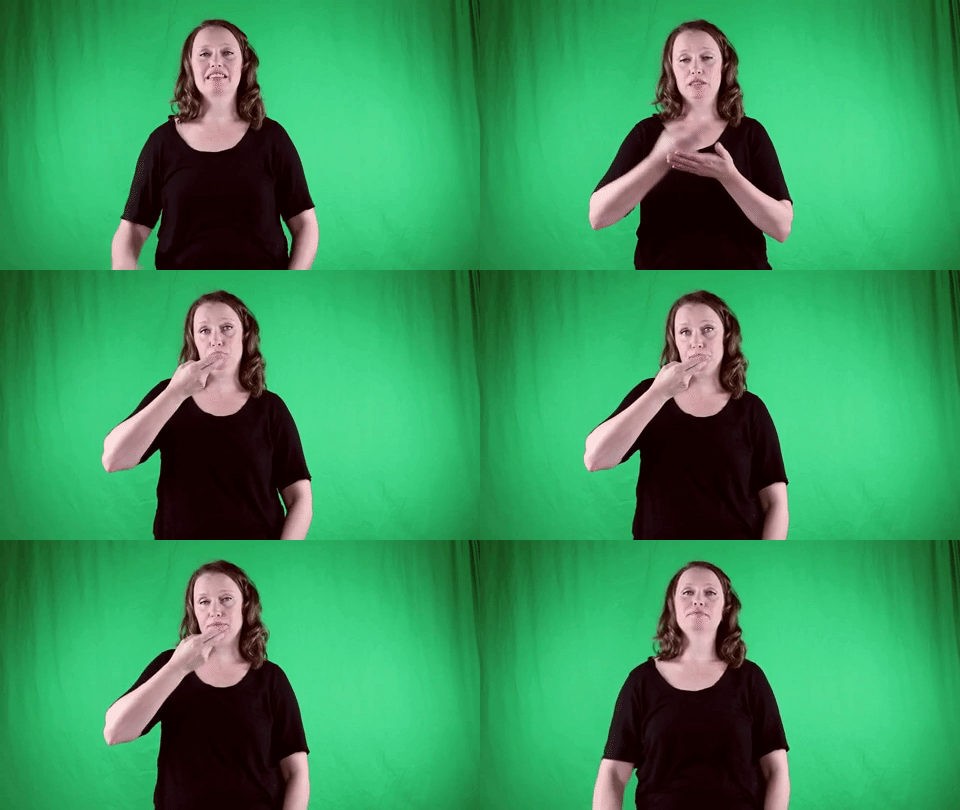
The sign for SPOON in ASL typically involves using the dominant hand in an “H” handshape. This hand mimics the action of scooping from an imaginary bowl in front of you. The movement is small and controlled, usually done once or twice to show the concept clearly. The non-dominant hand may form a flat “O” shape to represent the bowl beneath, although this is optional. It’s important not to confuse the sign for SPOON in ASL with similar signs like fork or knife. The fork sign often involves a tapping motion with a V handshape, while the knife sign uses a slicing motion with a flat handshape. These distinctions are crucial for clarity in conversation. Common errors when learning the sign for SPOON in ASL include over-exaggerating the motion, using an incorrect handshape, or placing the sign too high or too low in the signing space. These issues can hinder understanding and make the sign look unnatural. Practicing with fluent signers or using video dictionaries can help minimize these mistakes. There are also classifier uses of the spoon sign in more advanced ASL. For example, a signer might use the spoon handshape to describe a scooping motion in a story or to illustrate someone eating soup. Understanding these extended meanings adds depth and flexibility to your signing.
Tips for Beginners3>
If you’re new to ASL, learning the sign for SPOON in ASL is a great place to start because it’s concrete and easy to visualize. Begin by mastering the “H” handshape and practicing the scooping motion slowly. Make sure your hand is in front of your body and that your movement is smooth and deliberate. One common mistake is confusing the spoon handshape with similar ones used for fork or chopsticks. Always double-check that your fingers are in the correct position and that your sign clearly mimics the act of using a spoon. Watching videos from native signers can help reinforce this. It’s also easy for beginners to rush through the sign, making it hard to understand. Take your time, focus on clarity, and don’t be afraid to repeat the sign to increase accuracy. Practicing in short daily sessions will help you retain the sign for SPOON in ASL more effectively. Try to connect the sign to real-life situations. Sign it during meals, when setting the table, or while naming utensils. The more you use it in context, the more natural it will feel. And remember—mistakes are just part of the learning journey. Keep going and stay curious!
Connections to Other Topics
The sign for SPOON in ASL connects smoothly with other food-related vocabulary. For example, the signs for fork and knife are commonly learned alongside spoon. These three utensil signs form a foundational trio for discussing table settings and meals in ASL. Another related sign is bowl, which pairs naturally with the spoon sign, especially when describing actions like serving or eating soup. Practicing these signs together helps reinforce contextual usage and improves conversational flow. You can also link the sign for SPOON in ASL to signs for food and eat. The sign for eat is often used in combination with utensil signs to form full sentences, like “I eat soup with a spoon.” These multi-sign expressions enhance grammatical understanding and fluency. The sign for cereal is another useful connection, especially when discussing breakfast routines. Using the spoon sign in combination with cereal or milk helps learners build descriptive sentences and narratives in ASL. Lastly, the classifier system in ASL allows the spoon handshape to take on expanded meanings. For instance, it can represent small, slender objects in storytelling. Learning these connections deepens your grasp of ASL’s visual-spatial grammar.
Lengthy Summary
The sign for SPOON in ASL is a practical and visually intuitive sign that plays an essential role in everyday conversation. Whether you’re discussing meals, describing objects, or telling a story, understanding this sign opens the door to a broader range of expressions. Its clear handshape and iconic motion make it accessible to beginners while also offering advanced uses for fluent signers. Through consistent practice—using mirrors, video recordings, and real-life context—you can master the sign for SPOON in ASL and use it confidently. Cultural context enhances your appreciation of why and how this sign is used, especially in group dining situations or ASL storytelling. Being aware of regional variations and proper signing space ensures you communicate respectfully and effectively. Beginners benefit from focusing on clarity, repetition, and contextual usage. Avoiding common errors, like incorrect handshapes or exaggerated movements, will make your signing smoother and more natural. As your skills grow, connecting this sign with related vocabulary like fork, knife, bowl, and eat will deepen your understanding of ASL’s visual language. Incorporating the sign into daily routines helps reinforce learning. Signing during meals, describing actions, or using the handshape in classifiers can turn a single vocabulary word into a versatile expressive tool. The sign for SPOON in ASL is more than just a gesture—it’s a gateway into meaningful, visual communication. Keep practicing, stay curious, and don’t be afraid to sign boldly. Every sign you learn brings you closer to fluency. Keep the sign for SPOON in ASL in your daily rotation and watch your ASL skills flourish ️ . Synonyms: utensil, ladle, scoop, serving spoon, tablespoon Educational resources: Find related learning materials in our course bank! Want more? Check out some of our popular learning activities on the homepage! Need to look up a sign? Use our highly rated dictionary: https://aslinteractive.com/best-asl-dictionary/ Follow us on tiktok: https://www.tiktok.com/@aslinteractive. More social media links at the bottom of this page! Long-tail Keywords: what is the sign for spoon in ASL, how do you sign spoon in American Sign Language, ASL sign for spoon Categories: tags: ASL food signs, kitchen utensils in ASL, dining vocabulary in ASL, cooking tools in sign language, American Sign Language basics
Want more? Check out some of our popular learning activities!
ASL Interactive Resources
ASLInteractive YouTube Channel
Follow us on tiktok: @aslinteractive.com
Follow us on Instagram: aslinteractive
Facebook page: aslinteractive
Facebook group: aslinteractive
LInkedIn: ASL Interactive LLC
Twitter: @ASL_interactive
*Some information on this page is AI-generated. AI can make mistakes. Please check the information.
Responses