Sign for CHURCH in ASL | 🛐 ASL Dictionary

Definition: A place of worship.

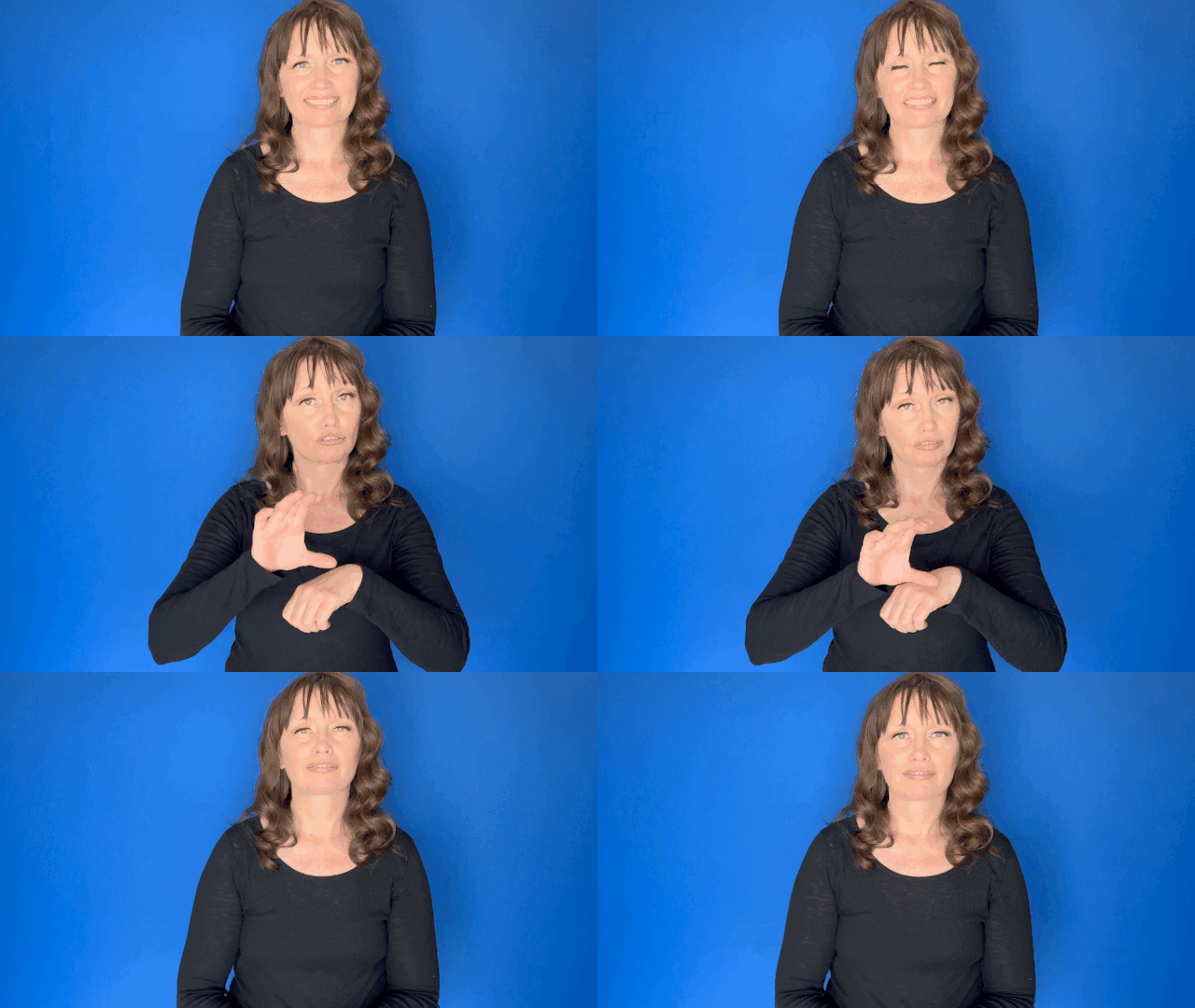
Sign for CHURCH in ASL

YouTube player

Practice Activities:

To develop fluency with the sign for CHURCH in ASL, begin by practicing the sign in isolation in front of a mirror. Repeat the sign slowly and then at a natural pace, focusing on handshape and the placement of the dominant hand forming the letter ‘C’ striking the back of the non-dominant fist. Think about rhythm and clarity while signing.

Next, create simple sentences using the sign for CHURCH in ASL to build context. Examples include: I go to CHURCH every Sunday, or My family drives to CHURCH together. Sign each sentence slowly, breaking it into phrases, then try to sign fluidly without pause. You can record yourself and replay the videos to assess accuracy.

Practice using the sign in a storytelling setting. Try giving a short narrative about your weekend that includes going to CHURCH. You can use signs for family members, time-related signs like morning or afternoon, and directionality for travel. Use facial expressions to express feelings like excitement, peace, or routine.

Work with a partner to quiz each other using flashcards with English sentences. One person says or signs an English sentence, and the other converts it into ASL using appropriate structure and incorporating the sign for CHURCH in ASL. Use yes/no questions or WH-questions involving CHURCH for additional practice.

Use online ASL videos or events featuring religious vocabulary and observe how native signers use the sign for CHURCH. Imitate their signing speed, facial expression, and consistency. Try shadowing—watch a short clip, pause it, and sign along to build confidence.

To reinforce retention, label a space on your calendar with the CHURCH sign as part of your weekly routine. Associating it with a visual schedule helps embed the sign into your memory and encourages regular use in real-life scenarios ️ .

Cultural Context:

The sign for CHURCH in ASL holds more than just a literal meaning. It reflects the cultural and spiritual importance of community gatherings within the Deaf community. Like many signs in American Sign Language, it often carries emotional and social context that enriches its use.

When Deaf individuals use the sign for CHURCH in ASL, they may be referring not only to a place of worship but also to the social bonds and support systems they find there. For many, the church has historically been a place for Deaf fellowship, events, and education. Deaf churches or church services with interpreters play a vital role in community life.

The sign for CHURCH in ASL typically incorporates the manual letter C along with a motion that represents the concept of a building. This unique combination of letters and movement embodies how ASL often builds deeper meaning through simple gestures. It’s not just about the place—it’s about the shared experience within that space.

In Deaf culture, the value of visual communication shapes how spirituality is experienced and expressed. The sign for CHURCH in ASL can be a deeply personal gesture, used during moments of prayer, storytelling, or communal singing done in ASL. These interactions reinforce cultural identity and language pride among Deaf signers.

Historically, many Deaf churchgoers have gathered in spaces where sermons are interpreted or fully led in sign language. These spaces prioritize accessibility and inclusion, making the sign for CHURCH in ASL a path into spiritual inclusion and community engagement. For some, it signifies a safe place where Deaf voices and stories are central.

Because American Sign Language is a living and evolving language, the sign for CHURCH in ASL may vary slightly depending on regional dialects or personal preferences within the community. However, the meaning remains deeply tied to both faith and fellowship across Deaf spaces. Maintaining this sign in everyday use shows a strong link between language and belief.

Community involvement in church life often includes volunteering, worship, storytelling, and more. Using the sign for CHURCH in ASL in these spaces reflects full cultural participation. It allows Deaf individuals to share, learn, and grow in their spiritual lives just as hearing individuals do in spoken environments.

The integration of the sign for CHURCH in ASL into religious settings also highlights how important it is for institutions to embrace sign language access. Accessible religious spaces foster inclusion and break down communication barriers. The presence of this sign in religious vocabulary encourages equal participation in spiritual life.

Understanding the cultural context of

Extended Definition:

The sign for CHURCH in ASL is a commonly used word in religious and community contexts. Understanding how to properly form and recognize the sign helps learners build vocabulary and fluency in everyday conversations involving faith, worship, and social gatherings at a church.

To make the sign for CHURCH in ASL, you use two hands. Hold your non-dominant hand in a closed fist, palm facing down. Then use your dominant hand to form the letter C and tap it twice on top of the back of the other hand. This motion represents the idea of a church building, reinforcing the visual language that ASL uses.

The sign for CHURCH in ASL is often used in phrases like go to church, church group, church service, or church meeting. It can also appear in conversations about events or locations, such as describing where a service takes place or inviting someone to attend a function. Because the sign is so specific in shape and motion, it’s important to use correct hand positioning to avoid confusion with similar signs like CLASS or COMMUNITY.

In American Sign Language, accuracy is very important, especially with signs like CHURCH that look similar to others but have different handshapes or movements. Misplacing your C hand or using the wrong hand for the base can make your sign less clear. Practicing frequently ensures that your sign for CHURCH in ASL is both accurate and easily understood by others.

The sign also connects with cultural and spiritual dimensions of Deaf communities. Many Deaf individuals and families participate in deaf-friendly services, where the sign for CHURCH in ASL might appear often during sermons, community announcements, or social events. Because of this, learning this sign isn’t only useful for vocabulary—it also supports cultural understanding and engagement.

When learning new signs like the sign for CHURCH in ASL, it’s helpful to watch native signers or instructional videos to see the movement in action. Practicing with a buddy or instructor can also boost your confidence and correct mistakes. Including facial expressions naturally as you sign improves your communication and reflects authentic ASL usage.

Adding the sign for CHURCH in ASL to your vocabulary is useful if you’re preparing to attend a service, work in ministry, or participate in a religious event that includes Deaf members. For interpreters, ministers, or volunteers, it’s essential to sign words like CHURCH fluently and confidently. This promotes inclusion and respectful communication in faith-based settings.

In summary, the sign for CH

Synonyms: chapel, cathedral, parish, congregation, house of worship

Educational resources: Find related learning materials in our course bank!

Want more? Check out some of our popular learning activities on the homepage!

Need to look up a sign? Use our highly rated dictionary: https://aslinteractive.com/best-asl-dictionary/

Follow us on tiktok: https://www.tiktok.com/@aslinteractive. More social media links at the bottom of this page!

Long-tail Keywords: what is the sign for church in ASL, how do you sign church in ASL, ASL sign for church

Categories:

tags: Church, Facilities and other locations/needs, Occasions, Religion, Community Gathering

Parameters

*Handshape*:

The handshape used in the sign for CHURCH in ASL involves the dominant hand forming the letter “C” handshape , with fingers curved and thumb extended upward to create the shape of the letter. The non-dominant hand is in an “S” handshape ✊, acting as a base.

To perform the sign for CHURCH in ASL, the “C” hand gently taps the back of the “S” hand twice. This clear and structured handshape helps convey the concept accurately.

*Palm Orientation*:

In the sign for CHURCH in ASL, the dominant hand forms the letter “C” while the base non-dominant hand is in an S-handshape. The palm of the S-hand is facing downward, providing a steady surface. The C-hand taps on the back of the S-hand, typically twice, with the palm of the C-hand facing forward or slightly inward.

Palm orientation plays a key role in maintaining clarity in the sign for CHURCH in ASL. It ensures that the movement and positioning are easily distinguishable from similar signs. The combination of palm orientation and handshape helps convey the concept clearly .

*Location*:

The location for the sign for CHURCH in ASL is on the back of the non-dominant hand. The non-dominant hand is held steady in front of the chest, palm facing down, representing a base or foundation. The dominant hand, forming the letter C, taps on the back of the non-dominant hand.

Performing the sign for CHURCH in ASL at chest level maintains visual clarity and aligns with signs related to gathering or buildings. This positioning helps contextually ground the meaning of the word.

*Movement*:

To make the sign for church in ASL, begin by forming the letter C with your dominant hand. Place your non-dominant hand in an S handshape, resting flat and horizontal in front of you, palm down.

Move the C hand downward and tap it twice on the back of the S hand near the wrist area. The motion should be light but deliberate. This sign visually resembles a bell being struck, reflecting the idea of a church bell. The sign for church in ASL is both clear and iconic.

*Non-Manual Signals*:

When using the sign for CHURCH in ASL, maintain a neutral or slightly respectful facial expression to convey formality or reverence, depending on the context. Keep your eyes focused on the dominant hand as it connects with the non-dominant hand, showing attentiveness. This non-manual signal complements the physical motion of the sign for CHURCH in ASL by supporting its cultural and emotional meaning .

In conversational contexts, a calm demeanor or slight head nod may reinforce the seriousness or importance of the topic. The non-manual signals help clarify the intent behind the sign for CHURCH in ASL, especially when discussing religious settings or formal gatherings.

*Prosody, Dominant/Non-Dominant Hand*:

The sign for CHURCH in ASL uses the dominant hand in the shape of the letter “C” and taps it twice on the back of the non-dominant hand, which is held flat with the palm facing down. The dominant “C” hand represents the concept of “church” connecting to a solid foundation.

While performing the sign for CHURCH in ASL, the motion is firm and deliberate, emphasizing the strength and stability of the institution. Both hands stay close to the body, maintaining a neutral signing space.

Tips for Beginners:

When learning the sign for CHURCH in ASL, one of the first things to focus on is correct handshape and contact. The dominant hand forms the letter “C” and taps on top of the back of the non-dominant hand, which is in an “S” handshape, knuckles down. Make sure the “C” hand hits the back of the “S” hand in a clear, deliberate motion to ensure the sign is understood.

New signers often struggle with motion and placement. The “C” should not hover or hit too lightly—it needs contact with the back of the hand. Avoid signing too high or too low on the arm. The correct spot is directly on the back of the non-dominant hand, so stay consistent with every repetition.

One common mistake is confusing the sign for CHURCH in ASL with similar signs like “school” or “class.” These may look somewhat related because of their form and rhythm, but each sign has distinct handshapes. Practicing in front of a mirror or recording yourself can help increase awareness of differences and reduce mix-ups.

Facial expressions are not heavily used with this particular sign, but confidence is still key. The motion should be confident, clear, and smooth. If you’re unsure, slow it down, check your hand placement, and then speed up as comfort grows.

Repetition and real-life application are essential. Use the sign for CHURCH in ASL during conversation or when telling stories about your week, such as attending spiritual services or describing locations. Adding this practice to your weekly language routine will make the sign second nature.

Finally, don’t be discouraged by corrections from more experienced signers. Feedback helps improve precision. The more you use the sign for CHURCH in ASL in context, the more naturally it will come.

sign for CHURCH in ASL, asl sign church, how to sign church in asl, church sign language meaning, sign language for church

Connections to Other topics:

The sign for CHURCH in ASL connects closely with other institution-related signs, particularly those that involve buildings or structured locations. Much like the sign for SCHOOL or HOSPITAL, the sign for CHURCH uses meaningful handshape and placement to convey the idea of a physical place with a specific function. These signs help learners understand how ASL conceptualizes locations by associating them with related handshapes across various categories.

The handshape used in the sign for CHURCH involves the letter “C” from the ASL alphabet which connects it to signs like CITY and CLASS, both of which incorporate handshapes from the manual alphabet as part of their semantic markers. This technique of using initialized signs is common in institutional vocabulary and highlights pathways for learners to group similar types of signs. Recognizing this structure provides an essential building block in developing receptive and expressive fluency.

Learners will also see the sign for CHURCH appear in compound signs or phrases such as GO-TO-CHURCH, LEAVE-CHURCH, or CHURCH-MEETING. These contextual uses show how verbs and nouns interact fluidly in ASL and build on the sign by adding movement or other contextual elements. These compounds give insight into the way ASL sequences concepts naturally and efficiently without excessive finger movement.

The sign for CHURCH in ASL can also be linked contextually with cultural events and religious concepts such as PRAY, BIBLE, and WEDDING. Understanding this group of religious and spiritual vocabulary enables better communication about belief systems, holidays, and traditions. For example, discussing Easter might involve the sign for CHURCH alongside LOOK-FOR-EGGS or JESUS, providing deeper narrative skills.

This vocabulary grouping underlines the importance of semantic fields in ASL and how learning signs like the sign for CHURCH in ASL can open up broader communication in topics such as community, culture, and values. Learners benefit from recognizing thematic clusters like this to enrich their expressive capacity.

Summary:

The sign for CHURCH in ASL uses a specific combination of handshapes and movement that conveys not only the physical building but also the community and spiritual atmosphere often associated with the word. The dominant hand forms a “C” handshape and taps down twice onto the back of the non-dominant hand, which is made into an “S” handshape and held steady.

This motion symbolizes the foundational nature of a church—both as a structure and an institution. The “C” for church is visually prominent and used in a way that links with ASL’s broader use of initialized signs. The “S” hand as a base helps reinforce the idea of stability and community.

In terms of grammatical usage, the sign for CHURCH in ASL functions as a noun but can be modified using facial expressions and signing flow to suggest associated actions like going to church, attending services, or referencing church events. These modifications might include directional verbs or classifiers, which are common in fluent ASL usage.

The sign is specific and differs from other religious signs such as TEMPLE or SYNAGOGUE, which have their own distinct forms. Each of those signs incorporates different handshapes or motions to refer to different places of worship, acknowledging the diversity in faith practices.

Linguistically, the sign for CHURCH in ASL exemplifies how initialization is used to create signs that retain ties to English spelling, but still follow visual and kinesthetic rules native to ASL. The “C” is not random—it clearly refers to the English word but becomes functional within the spatial and visual modality of sign language.

Applied linguistics offers deeper insights here, connecting the sign to educational contexts. Many Deaf institutions historically have had religious affiliations, and the sign for CHURCH in ASL would have been a routine part of vocabulary for generations of Deaf students in church-run schools.

From a sociolinguistic standpoint, church gatherings play a key role in Deaf culture, especially in rural or historically underserved areas where churches have functioned as community centers. The sign for CHURCH in ASL, therefore, is often rich with communal and cultural memory beyond its surface meaning.

In Deaf history, churches were some of the first places where sign language was permitted or even encouraged. Past Deaf ministry programs saw churches employing Deaf pastors or interpreters, using this sign regularly in sermons, community meetings, and outreach.

Interpreters commonly use the sign when facilitating religious services. The rhythm and clarity of the motion make it easy to recognize, even in fast-paced interpretation. It supports the fluid delivery of religious content in ASL, often paired with signs for PRAYER, GOD, or FELLOWSHIP.

The sign can also partner naturally with other expressions in ASL narrative structures. For instance, one could sign CHURCH, SUNDAY, GATHER, showing a sequence of events with spatial referencing to carry temporal meaning. ASL’s visual modality allows these layered meanings to emerge clearly.

Exploring iconicity, the downward tapping action mimics the idea of something grounded and supported—evoking a mental image of structure. This visual logic enhances memory and recall for both novice and native users of ASL.

The sign for CHURCH in ASL can also appear in religious storytelling or historical discussions involving major events in the Deaf community. Such events might include church-based schools, missions, or outreach efforts.

It’s important to note the role of regional variation. While the standard form of the sign is broadly recognized across American Deaf culture, local churches may develop slight variations or even colloquialisms related to specific denominations or faith practices.

Bilingualism and bimodal interpretations of faith discussions further show how the sign for CHURCH in ASL integrates with larger themes of language accessibility. In Deaf theology or ASL Bible translations, this sign appears frequently and must convey reverent and literal meanings concurrently.

Many Deaf worship settings have adapted signs that reflect theological nuances, including stylized versions of the sign. Some factions or cultural groups might adopt more embodied signing styles, incorporating full-body classifiers to represent congregation, worship, or spiritual intensity.

In visual storytelling, such as ASL poetry or dramatic interpretation, the sign may be stylized further to express emotions like peace, community, or reflection. Through repetition or visual metaphor, the sign for CHURCH in ASL becomes narrative as well as referential.

By comparison, the sign for CHURCH is similar to the sign for COURT but distinguished by handshape and movement. Misuse between the two can lead to misunderstanding, especially in high-context settings like interpreted events or legal explanations involving community faith institutions.

The historical development of the sign reflects how ASL evolved during the 19th and 20th centuries, incorporating more initialized signs as education systems emphasized English literacy. CHURCH entered standard vocabulary during this time, bridging language aims and cultural relevance.

The interplay between Deaf Culture and the sign for CHURCH in ASL remains strong today

Want more? Check out some of our popular learning activities!

ASL Interactive Resources

ASLInteractive YouTube Channel

Follow us on tiktok: @aslinteractive.com

Follow us on Instagram: aslinteractive

Facebook page: aslinteractive

Facebook group: aslinteractive

LInkedIn: ASL Interactive LLC

Twitter: @ASL_interactive

*Some information on this page is AI-generated. AI can make mistakes. Please check the information.

Sign for CHURCH in ASL

Responses